Last updated November 23, 2026
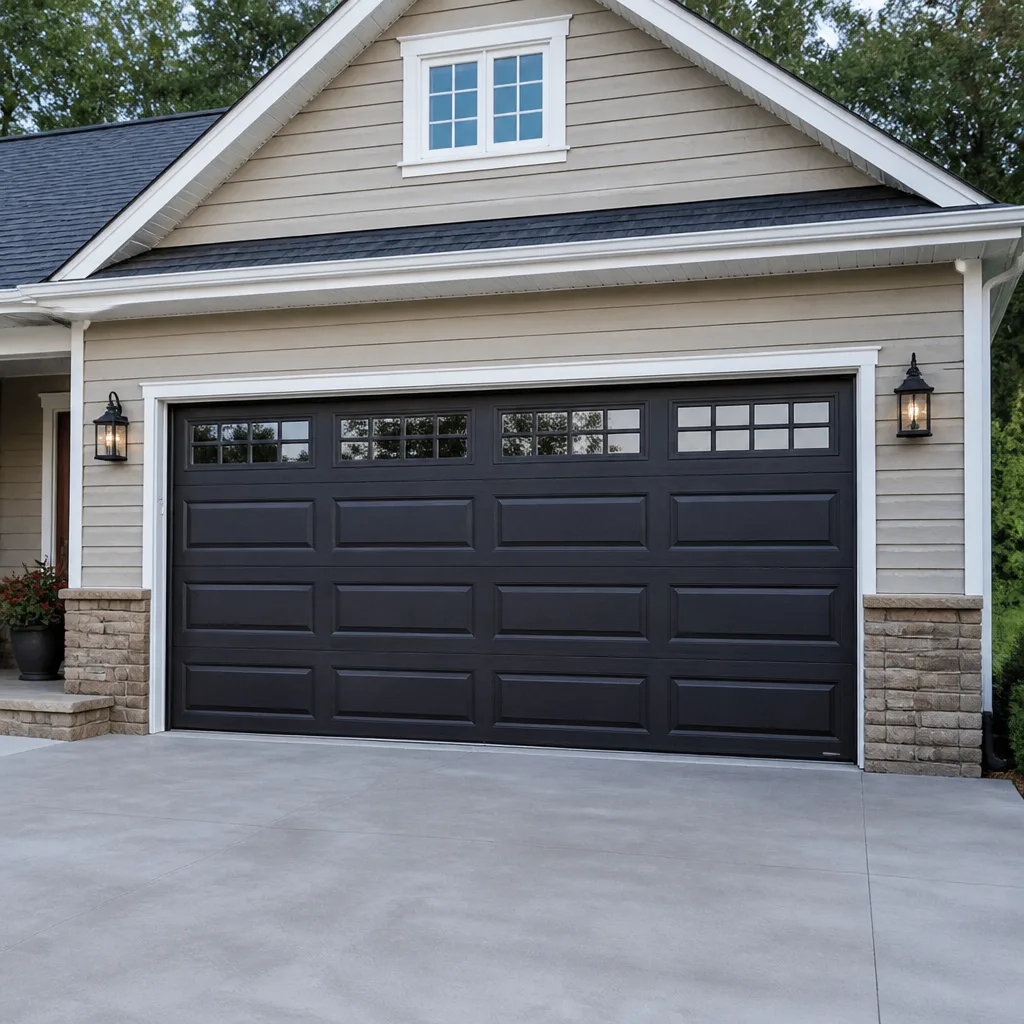 Raised-panel steel
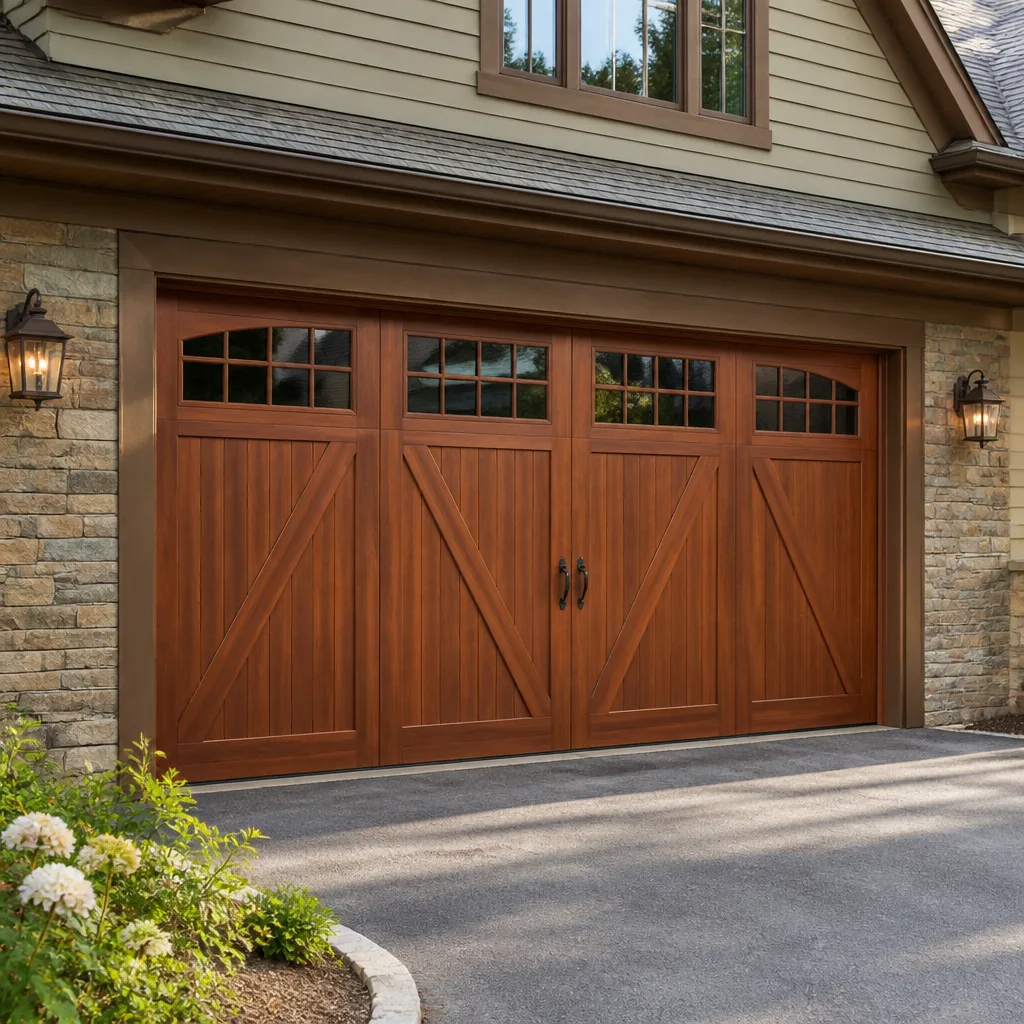 Carriage house
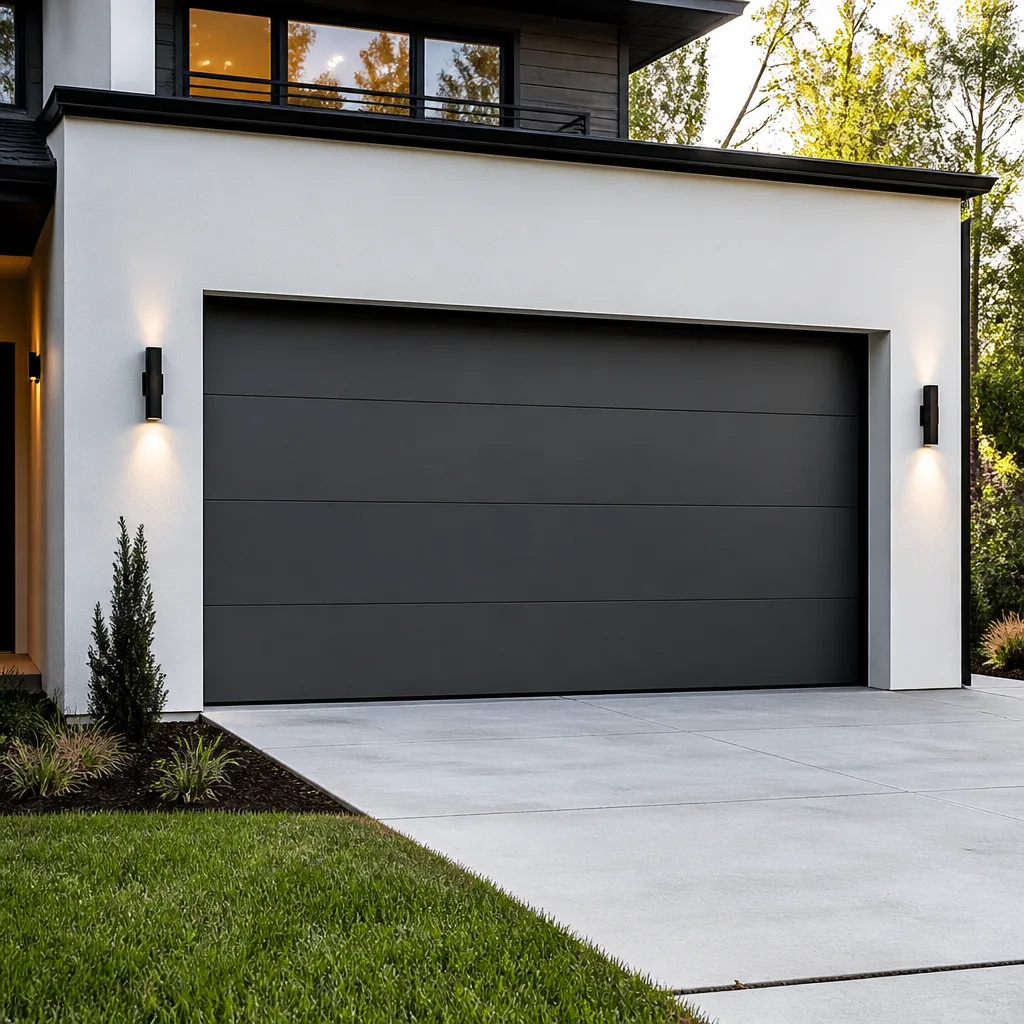 Modern flush
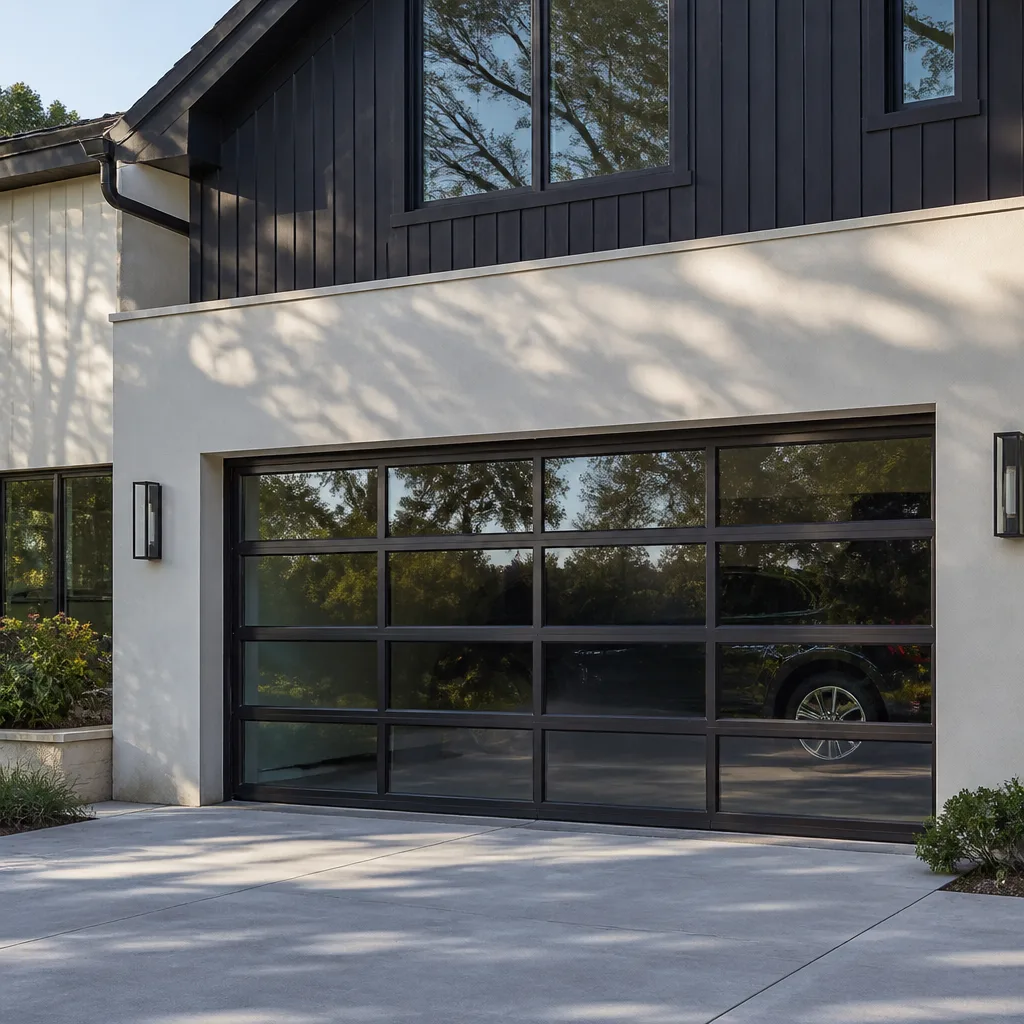 Full-view glass
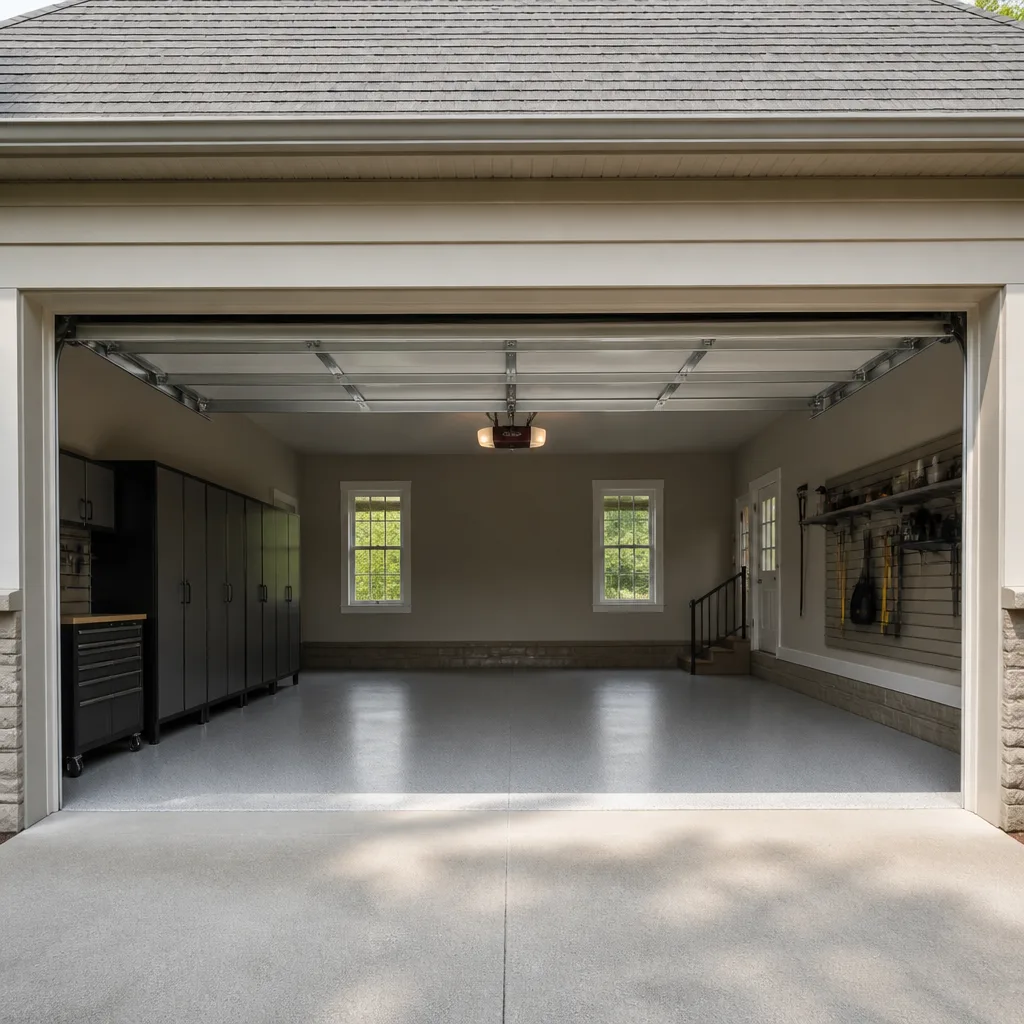 LiftMaster openers
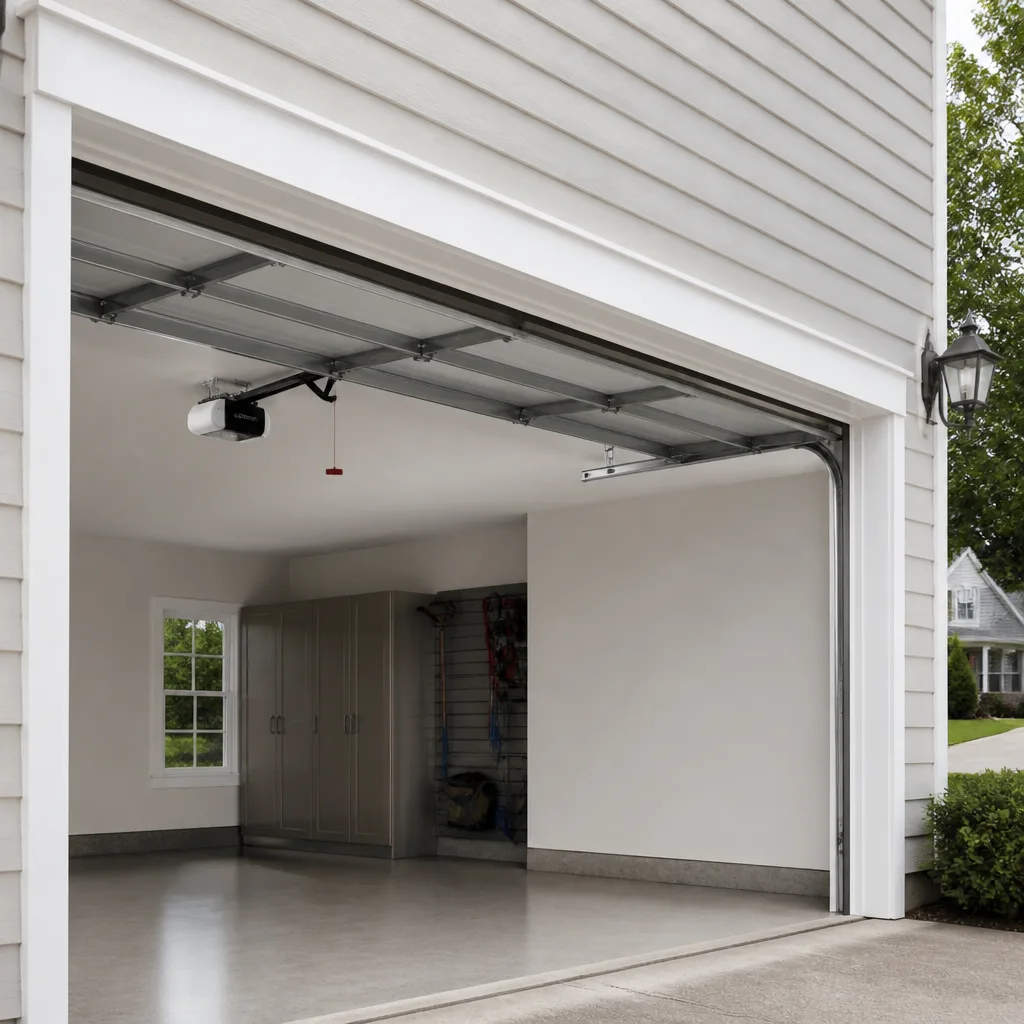 Chamberlain openers
Full 25-point door and opener safety check with every visit - springs, cables, rollers, tracks, and your LiftMaster or Chamberlain opener included
You get a price before we start. It does not change when the pro arrives.
Get your free estimateDIY vs Professional Garage Door: The Schaumburg Homeowner’s Decision Guide
Most DIY-versus-pro garage door advice gets the line wrong in both directions. Some guides treat every garage door task as a live grenade, which pushes homeowners into paying for work they could safely do on a slow morning. Others hand out instructions for winding torsion springs as if it’s a weekend project, which is genuinely dangerous. The truth is that garage doors split cleanly into two groups: tasks where the physics of the system makes professional involvement non-negotiable, and tasks a mechanically comfortable homeowner can own without risk. This guide draws that line clearly for Schaumburg homeowners, so you spend money where it matters and save it where you can.
Quick Answer
In Schaumburg, weatherseal replacement, roller swaps, hinge lubrication, and opener remote or keypad programming are safe DIY tasks. Torsion and extension spring replacement, cable replacement, and any work that requires loosening the lifting mechanism are professional-only, full stop. A reasonable middle path is to do the safe prep work yourself and call a pro for the spring or cable work, which often trims a service call by 30-40%.
Styles & brands we work with
- Raised-panel steel
- Carriage house
- Modern flush
- Full-view glass
- LiftMaster openers
- Chamberlain openers
Table of Contents
- Where DIY Ends and Professional Work Begins
- Torsion Springs: Why This Isn’t About Being Handy
- What Spring Work Costs in Schaumburg
- Illinois Liability: Permits, Insurance, and Your Risk
- The DIY Tasks That Actually Make Financial Sense Here
- How to Use a DIY Partial Repair Correctly
- Schaumburg Climate and What It Does to Your Door
- Brand Matters Less Than Diagnosis
Where DIY Ends and Professional Work Begins
The garage door is a balanced system held under tension. The door’s weight is counterbalanced by springs, the springs connect to cables, the cables run through drums, and the opener pushes and pulls the whole assembly along tracks. Every task that touches the tension side of that system carries the potential for a sudden release of stored energy. Every task on the outside of that system (seals, rollers, hinges, wiring the opener, programming remotes) is straightforward.
Here’s the practical split we use when a Schaumburg homeowner asks whether they should attempt something themselves.
Safe for a confident homeowner
- Replacing the bottom weatherseal or perimeter seal
- Swapping rollers (with the door fully closed and the opener disconnected)
- Lubricating hinges, rollers, and the torsion bar bearings
- Programming a new remote or wall keypad
- Visual inspection of cables for fraying or slack
- Replacing opener batteries, bulbs, and safety sensor lenses
- Tightening loose track bolts by hand
Professional-only
- Torsion spring replacement or adjustment
- Extension spring replacement or adjustment
- Cable replacement or re-spooling on the drums
- Any work requiring the door to be raised and locked off under tension
- Bracket replacement where the bracket holds spring tension
- Opener drive gear and chain/coupler replacement when the door is heavy
- Panel replacement that requires re-tensioning
This isn’t a skill judgment. It’s a physics judgment. A torsion spring on a standard residential door stores enough energy that a slip of a winding bar can break a wrist, a forearm, or worse. Trained technicians handle this work every day because they’ve built the muscle memory, they know the wind count for the door’s weight, and they use proper winding bars, not screwdrivers. Our technicians have up to 14 years of experience, and the work still demands respect.
Torsion Springs: Why This Isn’t About Being Handy
Torsion springs fail more often than any other garage door component, and they’re also the part most DIY guides underestimate. The reason isn’t that homeowners lack the handiness. It’s that spring replacement requires three things most home setups don’t have: the right winding bars, the correct wind count, and the calibration know-how to match the new spring’s tension to the actual door weight.
What the job actually involves
- Measure the door’s weight and the spring wire size, inside diameter, and length. Springs are matched to a specific door, not picked by size.
- Lock the door in the fully closed position so the tension is held below you, not above.
- Loosen the set screws on the winding cone while the spring is under tension, using two properly sized winding bars, not improvised tools.
- Unwind the spring, counting turns, until it’s relaxed. The turns you count are your reference for the new spring.
- Mount the new spring, wind it to the correct count for the door’s weight, and lock the set screws.
- Test the door’s balance with the opener disconnected, and adjust the tension if it drifts up or down.
- Reconnect the opener and re-test the safety reverse.
Every step carries risk if something goes wrong. That’s why garage door spring repair is the task we most often see homeowners attempt and then call us about after they’ve hurt themselves or damaged the door. The 30-40% you save by doing prep work yourself only makes sense if the prep work doesn’t involve loosening spring tension.
One more thing on spring physics. Springs don’t last forever. A torsion spring on a door that goes up and down several times a day typically has a finite cycle life, and cold weather accelerates fatigue. When you hear a sharp bang from the garage on a Schaumburg winter morning, that’s usually a spring snapping. Don’t operate the door until it’s inspected.
What Spring Work Costs in Schaumburg
Spring pricing is the question we get most, and it’s also where homeowners get the most confused, because pricing for a single spring and a matched pair are different things. On almost every standard residential door, springs are installed in pairs and replaced in pairs. Replacing one spring and leaving the other does two things: it leaves you with a mismatched pair that will fail unevenly, and it means you’ll be paying for a second service call shortly. We always quote both.
Typical Schaumburg spring pricing
- Single torsion spring, replacement: $180-$340
- Matched torsion spring pair, replacement: roughly double the single, so $360-$680
- Single extension spring, replacement: $150-$300
- Matched extension spring pair, replacement: roughly double the single, so $300-$600
- Spring plus cable replacement (common when a spring snaps): quoted as a combined line item, so ask for the breakdown
- General tune-up (lubrication, balance, hardware check): $100-$200
- Off-track door repair: $150-$400 depending on damage
- New opener installation (equipment + labor): $350-$800 depending on model
These are estimates, not the number you’ll pay. The written quote we give you after we see the door is the price. Prices depend on the door’s height and weight, the spring type, and whether ancillary parts like cables or drums need replacing. Plenty of door types are easier than others. Yours may fall on the simpler end.
If you’re cost-comparing, remember that spring pricing isn’t apples to apples across quotes. A $150 spring quote is often the price for a single spring on a 7-foot door with no cable work. A $400 quote is often a matched pair with cable and balance check. Always ask what’s included before comparing.
Illinois Liability: Permits, Insurance, and Your Risk
Garage door installation is more regulated than most homeowners expect, and the rules matter if you’re planning to install a door yourself or have it installed by an uninsured handyman. Some Illinois municipalities require a permit for garage door replacement, and most require the installer to be licensed and insured to pull the permit. The safest way to check is to call your city’s building department and ask what they require for your address. If you install your own door without a permit when one is needed, and someone is later injured by the door, your homeowner’s insurance may not cover the claim because the work wasn’t permitted. That’s a real exposure, not a scare tactic. We can’t tell you what your policy says, but we can tell you that the first thing a claims adjuster asks is who did the install and was it permitted.
Permit rules and licensing requirements differ city by city in this part of Illinois. Our advice is simple. Before any door replacement or major reconstruction, call your building department. Before you hire anyone, ask for a copy of their license and insurance certificate. Any legitimate professional will hand these over without hesitation. If you’re hiring through us, the local pro who shows up is licensed and insured as their state requires, and we can point you to that documentation before you commit.
One more point on liability, and it’s the one most DIY guides skip. If you install a door yourself and later sell the house, disclosure matters. Buyers ask about permitted work. Lacking a record can cost you leverage at negotiation time, even if everything works perfectly. The permit record is worth the fee.
The DIY Tasks That Actually Make Financial Sense Here
We’re not going to talk you out of every task. There are several jobs a homeowner can do in a couple of hours on a Saturday, save $100 or more, and end up with the same result a pro would deliver. Here are the ones that actually add up in Schaumburg.
Bottom weatherseal replacement
Every garage door in Schaumburg sees a lot of freeze-thaw cycles through winter. The bottom seal tucks under the door and takes the brunt of it. Over a few seasons the rubber cracks, flattens, or tears away, and you end up with cold air, snow, and occasionally rodents getting under the door. A new bottom seal runs $30-$70 in materials, and the job is a matter of pulling the old seal out of its aluminum retainer, sliding the new one in, and trimming it to fit. Fifteen minutes of work per door.
Roller swaps
Nylon rollers wear out quietly. If your door is rattling or shimmying on the way up, rollers are often the culprit. Disconnect the opener, raise the door fully, clamp it, and swap the rollers one at a time. Nylon rollers are $5-$15 each, so a full set is a modest purchase. The trick is never to loosen any bracket that carries spring tension. Rollers only.
Hinge and track lubrication
A tube of white lithium grease and a can of silicone spray, thirty minutes of your afternoon, and the door quiets down noticeably. Grease the hinge pivots, silicone spray on the torsion bar bearings and tracks. Skip the opener chain rail unless your opener’s manual calls for it. Buy the garage-door-specific lubricant, not WD-40 or general-purpose oil. In our experience the wrong lubricant is worse than none because it attracts dust and gums up over the summer.
Opener remote and keypad programming
If you’ve changed the remote, replaced the wall keypad, or cleared codes after losing a remote, program the new one yourself. Every modern opener has a “program” button and a sequence, and the manual spells it out in a page or two. Instructions vary by brand. Genie and Clopay systems use one pattern, Chamberlain and LiftMaster another. It’s a good idea to keep your opener manual in a drawer.
Cable visual inspection
Look at the cables, don’t touch them. What you’re looking for is fraying, kinked spots, cables that have jumped off the drum, or slack cables when the door is closed. A frayed cable is a call-us-now item, not a fix-it-yourself item. Replacing it involves loosening spring tension, which puts us back into the professional-only zone.
How to Use a DIY Partial Repair Correctly
Here’s the move most homeowners never consider: split the job. Do the safe prep work yourself, call a pro for the mechanically dangerous part, and you’ll typically trim the service call by 30-40%. That’s not just a savings trick, it’s a smarter way to work because the door gets the expert attention where it actually matters.
What “safe prep work” looks like
- Clear the garage floor in front of the door and move cars out. A clear workspace speeds the technician and cuts time.
- Document what’s happening. Note the sound, when it happens (opening, closing, both), and any symptoms. A photo or short video of the door during a cycle helps us diagnose in one visit instead of two.
- Inspect the door’s outside face and inside widgets yourself, without touching anything connected to spring tension. Note any panel dents, bent tracks, or sagging corners.
- Test the opener’s safety reverse and photo-eye function so you can tell the technician whether they’re working.
- If you need a replacement weatherseal, roller set, or hinge, buy the parts yourself and have them ready. Materials cost is often the same through the pro, but having them on hand means one visit, not two.
- Write down the door and opener model numbers. On the opener, look for a sticker on the back of the motor unit. On the door, check the inside lip or the hinge plates. Brand matters when the technician walks in – we work on your brand, but knowing it in advance helps ensure the right parts come out.
- If the technician will need the garage door opener manual for programming, pull it out.
What this saves: the technician’s time on the front end (diagnosis and set-up) and on the back end (clean-up and customer walk-through). What it doesn’t save: the risk. Spring and cable work is the same price whether you did prep or not, because the risk is what the cost pays for.
We sometimes get asked whether a homeowner can prep a spring replacement by loosening the door themselves. The answer is no. Every step on the tension side of the system is professional-only. If a technician tells you otherwise, that’s a signal about their workmanship, not yours.
Schaumburg Climate and What It Does to Your Door
Schaumburg garage doors live through a tough climate. Winters are cold enough to make steel and rubber contract, and the door’s seals, springs, and opener all experience thermal cycling by degrees. Spring, once it arrives, brings rain and wind that stress weatherstripping and can settle the door’s balance out. Summer’s humidity warps wood doors and loosens wooden panel sections. And the freeze-thaw cycles that define our winter do a number on bottom seals, thresholds, and the concrete in front of the door.
What this means for the DIY-versus-pro question is that the maintenance items matter more here than in a mild climate. Lubricate more often in spring and fall. Check the bottom seal in late fall, before the first freeze. If a torsion spring survived a full winter of hard cycling, it’s worth a visual inspection in spring before summer heat hits. These are the small, ongoing, low-risk tasks that stop a $200 fix from becoming a $600 repair.
Schaumburg’s housing stock is part of the equation too. The older neighborhoods have homes with original 16-foot doors, which are heavier than modern insulated steel doors. Heavier doors put more stress on springs and openers. A homeowner in a 1960s ranch is more likely to face spring work sooner than one in a newer subdivision. Not because the door is bad, but because physics doesn’t negotiate. That said, if you’re in a newer home, don’t assume the door is maintenance-free. Modern insulated doors still need lubrication, seal replacement, and periodic balance checks.
Emergency cases come up in this climate too. A spring snap in January, an opener that won’t respond in a storm, a door off-track after a wind gust. We offer emergency garage door service because a stuck door in this part of Illinois is often a security issue, not just an inconvenience. If the door won’t close and the garage holds tools, bikes, or a second refrigerator, being unable to secure the house matters. If you’re stuck in that position, garage door repair is a call faster than it is a weekend project.
Brand Matters Less Than Diagnosis
One theme we hear from clients who’ve worked with generalist handymen and single-brand installers is that the first question is always “what brand is it?” That question often decides whether the handyman will take the job at all. That shouldn’t be how it works. Garage doors are mechanical systems that share more in common across brands than they differ, and a technician who knows the mechanics can work on almost any nameplate. Our technicians are trained to service products from Genie, Clopay, Amarr, and Wayne Dalton, and that brand-agnostic approach matters for the DIY-versus-pro debate because it removes one of the standard excuses for skipping professional work.
Some shops only service what they sell. That’s a shop that will tell you your door isn’t serviceable because it’s the “wrong” brand, when the reality is they don’t stock the parts. If you’re calling around and hearing that, it’s worth a second opinion. The right answer to “will you work on this?” is almost always yes followed by questions about symptoms, not a hesitation about the nameplate.
Common Mistakes to Avoid
- Assuming “handy” means “safe” on spring work. We’ve met plenty of homeowners who could rebuild a carburetor but shouldn’t touch a torsion spring. The mechanical threshold isn’t about skill, it’s about the tooling and the physics.
- Buying a single spring when the door needs a pair. Matched pairs fail evenly and are the standard. Replacing one spring leaves you with a mismatched pair that tends to fail within a season.
- Ironing hung on the tension side. Loosening the tension on a spring without proper bars and a proper lock-off is how most garage door injuries happen. Don’t improvise with screwdrivers, Vise-Grips, or ratchet extensions.
- Skipping the permit question in Schaumburg. Call your city’s building department before any replacement. The permit record protects you at resale and at claim time.
- Using the wrong lubricant. WD-40 and general-purpose oil attract dust and gum up. White lithium grease on the hinges, silicone spray on the bearings and tracks. Nothing else.
- Ignoring the “bang” from the garage. A sharp bang when the door is opened is a spring failure indicator. Don’t cycle the door again. Get it inspected.
- Letting a chain-driven opener fight a heavier door. If the door is 16-foot or older, the opener may not be matched to the load. Diagnosis first, recommendation second, always.
- Hiring a handyman for spring or cable work. Many generalist handymen should correctly decline this work. If one doesn’t, ask why not.
See the difference
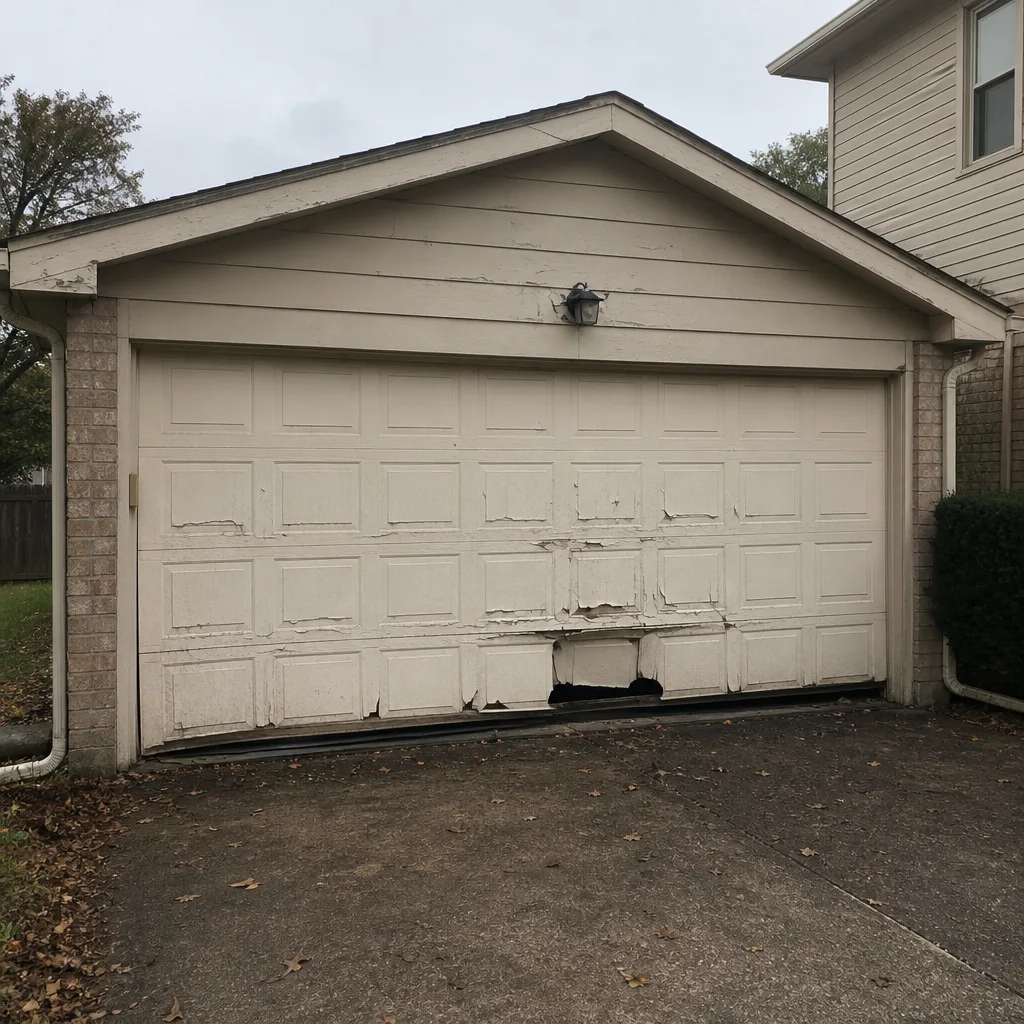 Before
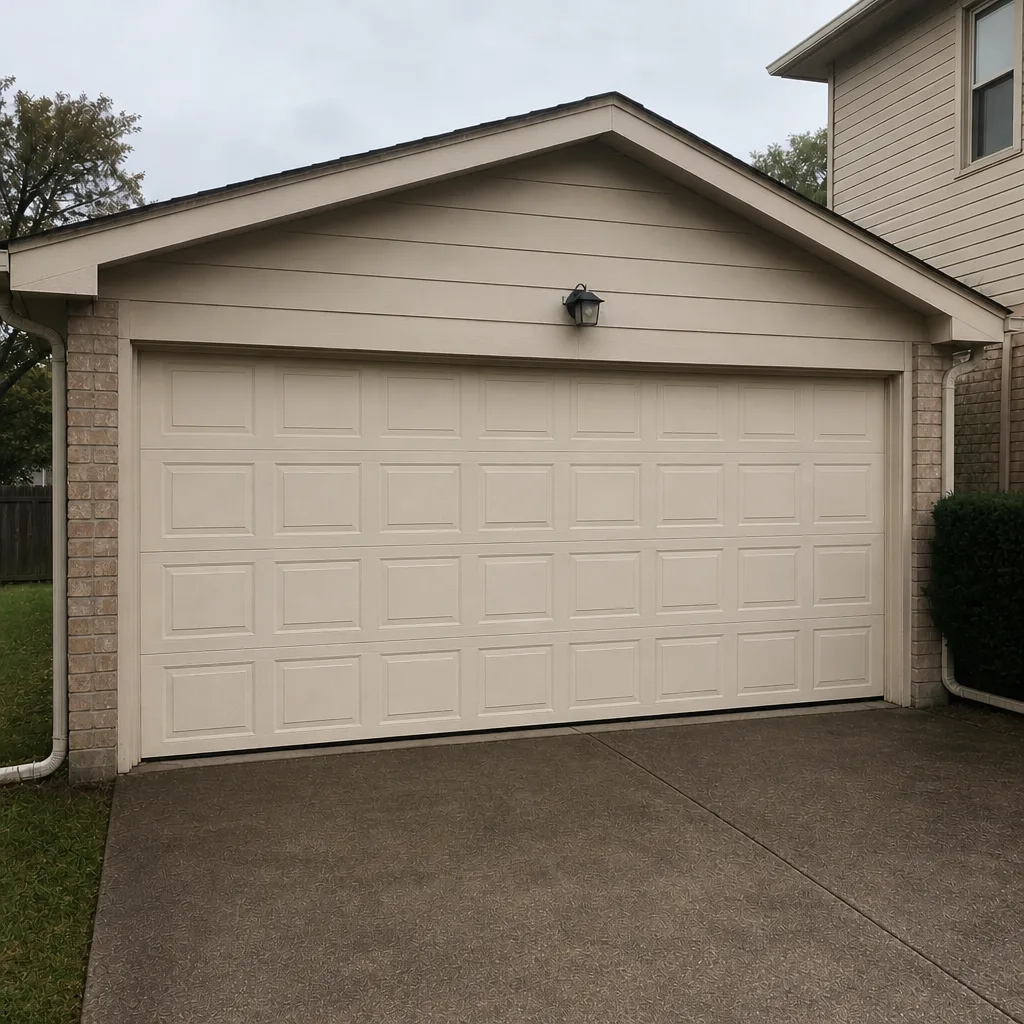 After
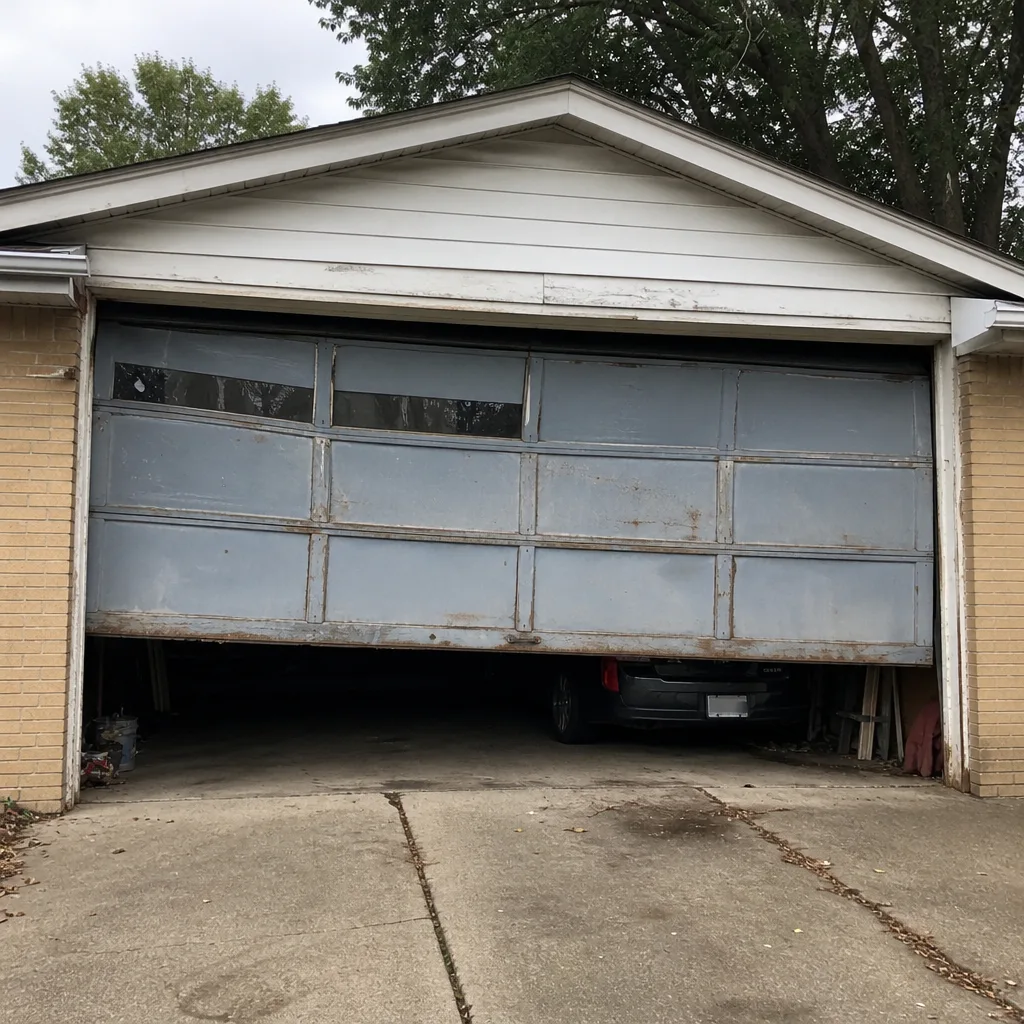 Before
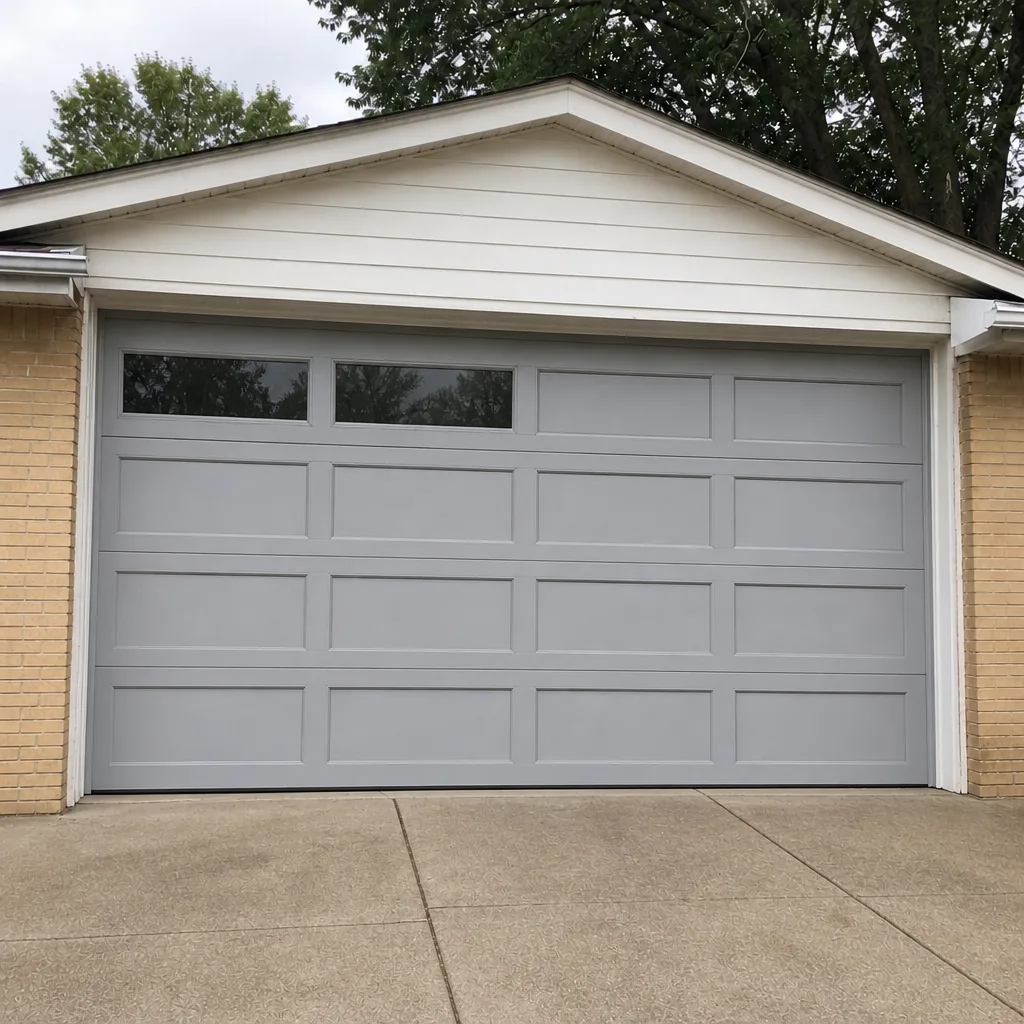 After
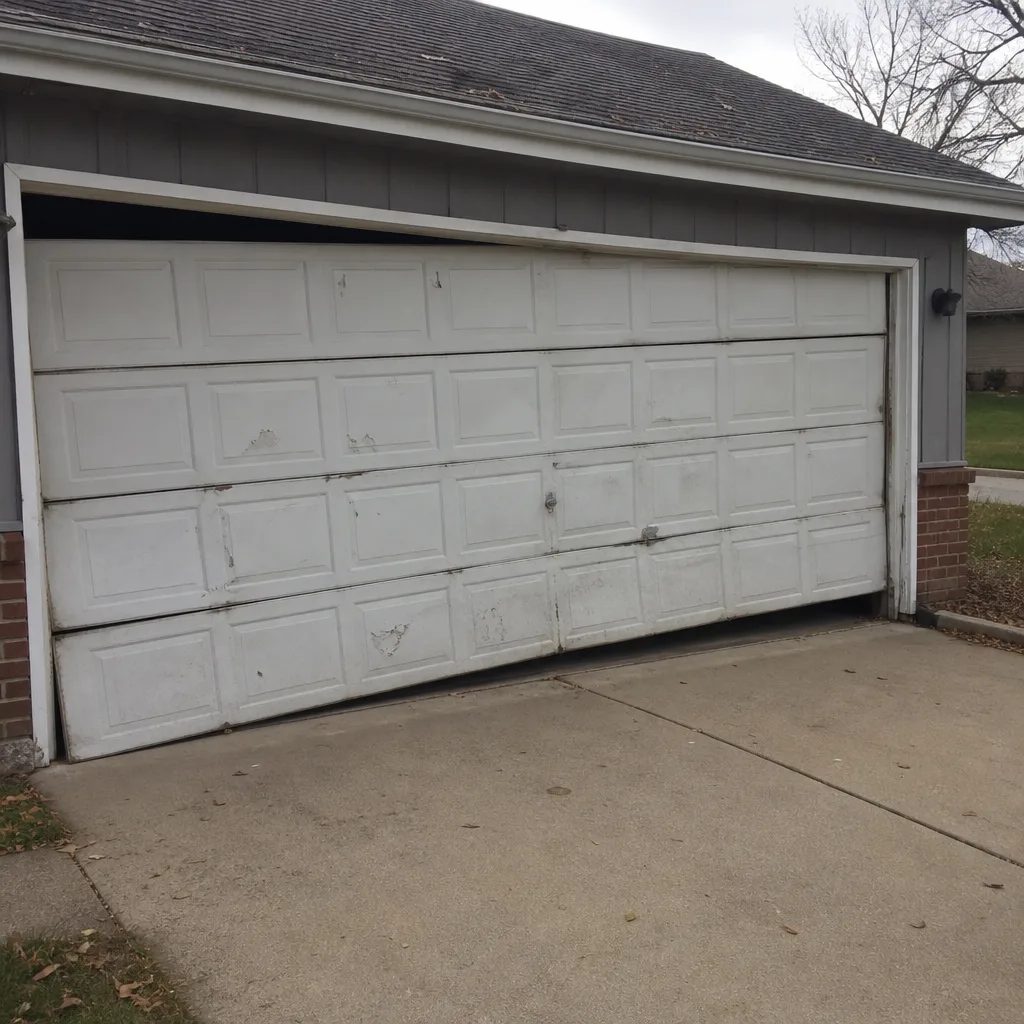 Before
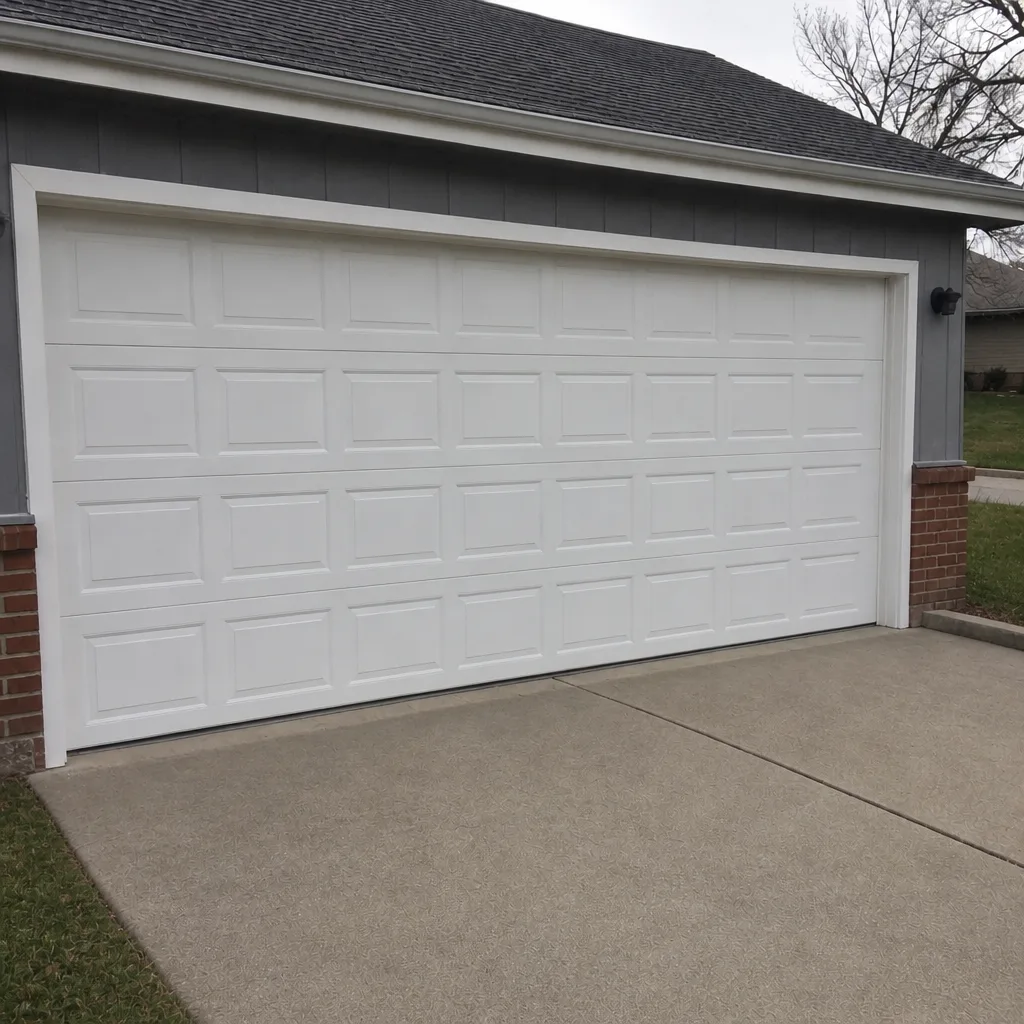 After
When to Call a Professional
Call a professional for any of the following without hesitation: a torsion or extension spring that has snapped or visibly sagged, a cable that has frayed or jumped a drum, a door that won’t balance when the opener is disconnected, a door that has come off-track, a torsion bar or cable drum that has loosened, or any time you hear a loud bang from the garage when the door runs. Call for opener work too, especially on heavy doors or when the opener is the drive mechanism and the door itself is unbalanced. Add to that list any situation where you’re unsure whether the door is safe to operate. A wobbling door is a call, not a look-it-up task. Schaumburg Garage Door Repair Co offers free estimates in Schaumburg. Call (866) 947-9001 and we’ll have a look, diagnose first, and give you a written price before any work starts.
Frequently Asked Questions
Not safely. Torsion and extension springs hold substantial stored energy, and releasing that energy incorrectly can cause serious injury or worse. The right tools (winding bars), the correct wind count for your door’s weight, and the balance calibration aren’t things most homeowners can improvise. Call us at (866) 947-9001 for a free estimate.
Possibly not, especially if the install required a permit and you skipped it. The safest path is to confirm permit requirements with your city’s building department and use a licensed, insured installer. We can point you to the paperwork from the local pro before you commit. Call (866) 947-9001 for a free estimate.
A single torsion spring typically costs $180-$340, and a matched pair runs roughly double, so $360-$680. Extension springs run a bit less, typically $150-$300 for a single and $300-$600 for a pair. Every quote is written and agreed before we start, and estimates are free at (866) 947-9001.
Yes, and it’s often a smart split. Weatherseal, rollers, and lubrication are safe DIY work. Spring and cable work are professional-only. Doing the safe prep yourself typically trims a service call by 30-40%. Call (866) 947-9001 to talk through what you’re planning, and we’ll tell you honestly where the line is.
Call us. Emergency garage door service covers situations where a stuck door is a security or safety concern, not just a scheduled fix. We’ll book you for the earliest available slot, including Sunday if that’s what you need. Call (866) 947-9001 and we’ll talk through what’s happening right now.
Yes. Our technicians are trained to service products from Genie, Clopay, Amarr, Wayne Dalton, and the other major brands. No brand restrictions. If you’re unsure what brand you have, look at the sticker on the opener’s motor unit or the hinge plates on the door, and call (866) 947-9001. We’ll tell you what we’re working with before you commit to a visit.
The Bottom Line
The DIY-versus-professional question for Schaumburg garage doors isn’t a skill question. It’s a risk question. Weatherseals, rollers, keypad programming, and lubrication are safe, straightforward tasks that save real money. Torsion springs, cables, and anything that touches the tension side of the system are professional-only, and the “handy” homeowner shouldn’t touch them. The best financial move for most Schaumburg homeowners is the split: do the safe items yourself, call us for the dangerous ones, and save 30-40% on the service call. When a repair is beyond your comfort zone, that’s what garage door opener repair and spring work through Schaumburg Garage Door Repair Co are for.
Call (866) 947-9001 for a free estimate in Schaumburg. Written quotes, upfront prices, no surprises. Our technicians have up to 14 years of experience working on doors, openers, and springs across every major brand.
Written by the team at Schaumburg Garage Door Repair Co.