Top Signs You Need Garage Door Service – Don’t Ignore These
Most garage doors don’t fail without warning. They give you weeks or months of subtle signals first: a new rattle, a slight sag, a door that hesitates before it lifts. Homeowners read those signals as quirks. Then a spring snaps, the door won’t budge, and a small fix becomes an emergency repair. This guide covers the warning signs worth acting on, how to spot them, and how to tell which ones can wait and which ones can’t.
Why Your Door’s “Normal” Matters More Than You Think
The single most useful thing you can do for your garage door costs nothing and takes about a minute: learn its baseline. Every door has a normal operating rhythm, and once you know yours, any deviation becomes obvious rather than mysterious.
A healthy door should open in roughly the same time every cycle, produce the same steady hum from the opener, and travel up and down without stutter or sway. Give or take a second is fine. When you notice it taking longer than it did a few months ago, that’s not “getting old,” it’s an early symptom. In our experience, a door that’s noticeably slower than its baseline is often showing spring fatigue, and without attention that fatigue tends to end in a spring failure within roughly 60 to 90 days.
The baseline has three parts worth noting:
- Cycle time – how long from press to fully open, and fully closed again.
- Sound profile – the steady hum of a healthy opener vs. any grind, scrape, or pop.
- Balance – whether the door hangs evenly and stays where you leave it.
Any deviation from that baseline deserves a look. Most of the time it’s a minor issue; catching it there is the whole point. If you’d rather not climb around diagnosing it yourself, call (866) 947-9001 and we’ll take a look.
The Five Early Warning Signs, Ranked by Urgency
Not every symptom is an emergency. Here they are, in the order we’d act on them.
- Unusual noises. A grinding sound usually points to worn rollers or a dry track. A sharp pop or bang, especially on opening, often signals a spring that’s breaking or has just broken. A scrape along one side usually means the door is rubbing the track. Noises are the earliest and most reliable warning you’ll get.
- The door feels heavy or struggles to lift. This is the classic sign the springs have lost tension and are no longer carrying the door’s weight. The opener is now doing work it was never built for, which wears it out too.
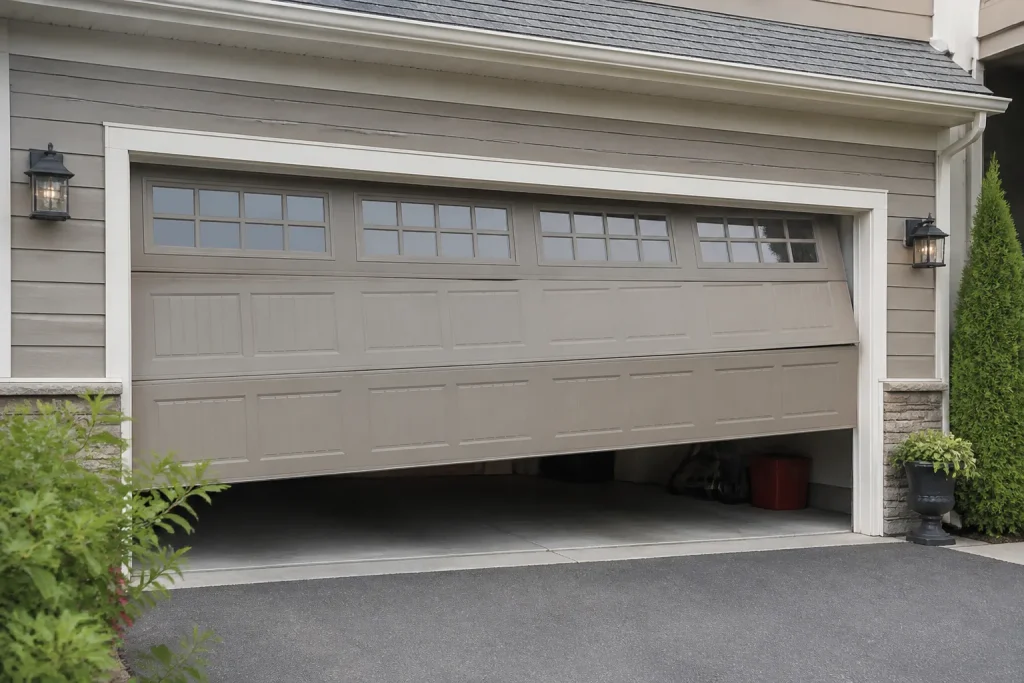
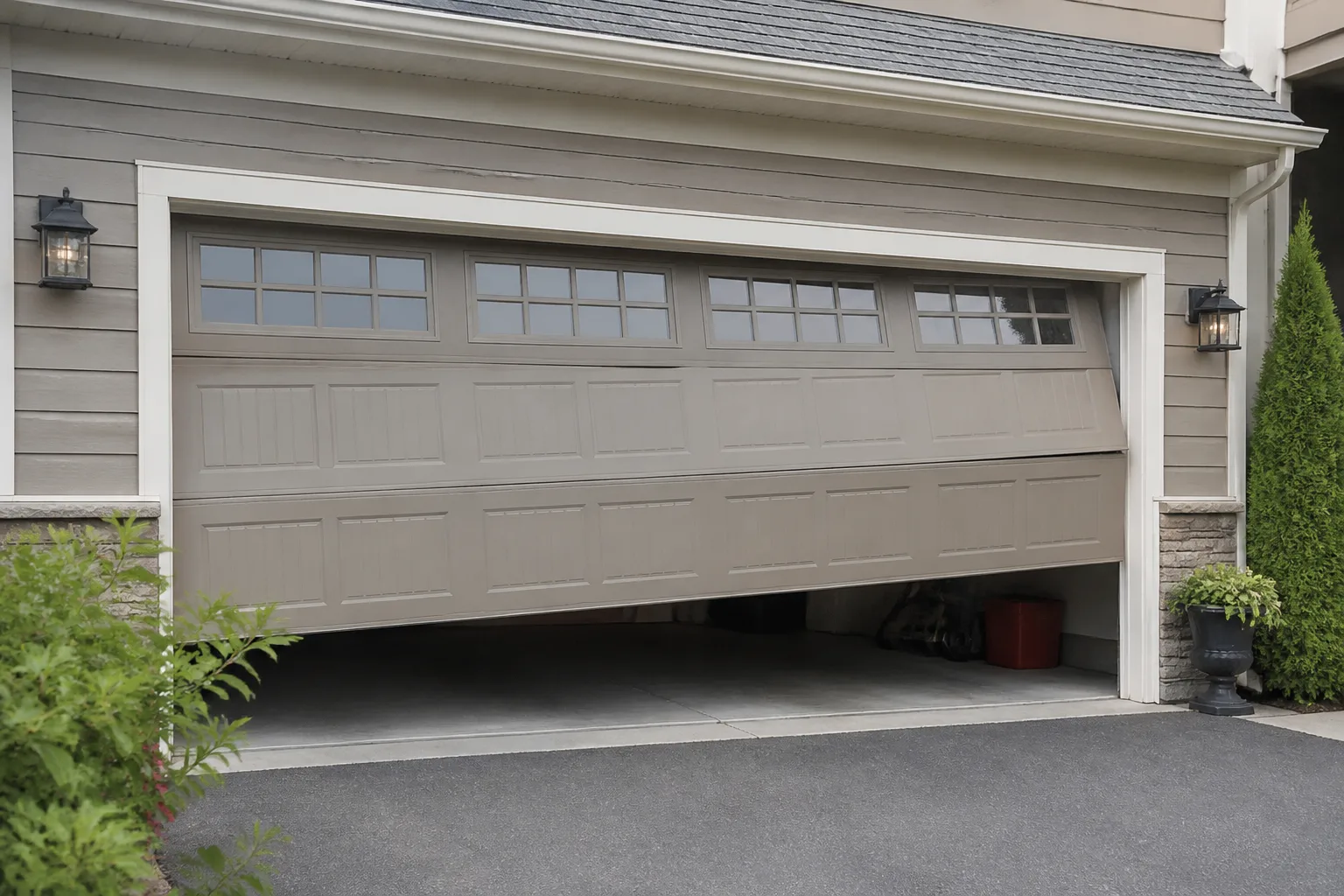
- Uneven travel or a crooked door. A door that opens at an angle, hangs low on one side, or looks tilted means the cables or springs are out of balance. This one gets urgent quickly because an unbalanced door is also a door more likely to come off track.
- Inconsistent opener behavior. The door opens halfway and reverses, or the remote works some days and not others. Often this isn’t the opener at all, it’s a door that’s binding. More on that below.
- Visible damage. Dents, bent panels, a sagging top section, or a cable that’s frayed. Dents from a bumped bumper are usually cosmetic, but a sagging or bent section can shift weight onto the mechanism.
Any one of these is worth scheduling a look at. But items one and two especially are the ones that turn into a broken-spring call if ignored.
The 60-Second Balance Test Every Homeowner Should Know
You can check the door’s health yourself in about a minute, and it tells you a lot. The idea is simple: a properly balanced door should more or less float, staying where you put it. If it doesn’t, the springs and cables are telling you something.
How it goes, generally: start with the door closed. With the opener disengaged (most openers have a manual release pull for exactly this), lift the door by hand about halfway up and let go. A balanced door will hold roughly in place. A door that crashes down is one where springs aren’t carrying the weight. A door that drifts up on its own has springs that are too tight.
A safety word first: this is a check of how the door behaves, not a repair. Torsion and extension springs are under high tension and can injure seriously if you try to adjust or replace them yourself. Never touch the springs or cables. Do the balance check with your hands only on the door panel, and if anything feels wrong, leave it and call a trained technician.
In our experience in Schaumburg, the balance test catches a lot of weakening springs before they fail. It’s not perfect, but a door that drifts or crashes by hand is a door you shouldn’t be operating while you wait. If it doesn’t balance, schedule an appointment soon.
Why Replacing the Opener First Is Often the Wrong Move
A slow, struggling, or inconsistent door gets blamed on the opener more than anything else. It’s an easy leap: the opener is the part with the motor and the remote, so it must be the problem. The truth is that plenty of “opener problems” are actually door problems.
When springs wear and the door gets heavy, the opener has to work harder. That extra load shows up as sluggish lifting, reversing before the door fully closes, and intermittent response. Put a new opener on a worn mechanism and you’ve spent money without fixing the root cause. The new opener now labors just as hard, and it’ll wear out faster too.
Diagnosis comes first, replacement second. If your door has a liftMaster, genie, Clopay, or Wayne Dalton opener, the right first step is checking the door’s balance and the opener’s settings: travel limits, force settings, and whether the safety sensors are clear and aligned. Many Genie and LiftMaster issues are adjustment problems, not dead units.
Sometimes the opener truly is failing. Age, dead logic boards, and radio issues happen. But before buying a new one, get the door and mechanism checked. If it turns out you need garage door opener repair, we work on your brand, whether that’s Genie, LiftMaster, Chamberlain, Craftsman, or the rest.
Why Spring and Fall Are Peak Failure Season in Schaumburg
Garage door problems don’t spread evenly through the year. In a suburban climate like Schaumburg’s, with its cold winters and warm summers, the transition seasons are when you notice the effects of a long, swinging temperature shift. Materials expand and contract, grease thickens in cold and thins in heat, and springs that are already fatigued are most likely to let go right around those shifts.
There’s also deferred maintenance. A lot of small issues get away with it through the mild months. When temperatures swing in spring and fall, doors that have been out of balance, dry on the tracks, or sitting on tired springs tend to say so. A pre-season check in March or October catches the majority of these before they fail.
What does a pre-season check look like? It’s mostly the basics:
- Balance test with the door disconnected from the opener
- A listen-and-watch pass for odd noises or uneven travel
- A visual check of the springs, cables, and tracks
- Opener settings, force, and safety sensor check
- A light clean and lubrication of the moving parts
For most Schaumburg homeowners, a pre-season check is cheap insurance against a spring snap that strands the car at the worst possible moment. And if a spring does go, garage door spring repair handles the high-tension work safely.
When to Call a Pro
Some items on the list are worth a call right away. If the door won’t balance, if you hear a pop followed by a door that’s suddenly much heavier, if a cable looks frayed, or if the door is off track, stop operating it and call. These are the cases where operating the door risks damaging more than just the door.
Other cases are fine to schedule: a new rattle, a door that’s a couple of seconds slower than its baseline, a dented panel. But “schedule” still means soon. In our experience, the gap between a small sign and a failure is where the savings live. We’ve seen enough to know that a quick look now is almost always cheaper than a broken part tomorrow.
If you’re in Schaumburg and any of the signs above sound familiar, we’re the local specialist who does this all day, every day. Our technicians have up to 14 years of experience, and we work on doors and openers across eight leading brands, so there are no brand restrictions and no runaround. We also offer emergency service when a stuck door is a real problem for your home.
Related services in Schaumburg: if you’ve got a door that’s failed, garage door repair covers it. If you’re weighing replacement, we also install new doors. And if the issue is the opener, we’ve got you. One call for doors, openers, and springs.
The Bottom Line
Your garage door tells you when it needs attention, usually long before it strands you. Learn its baseline, run the balance test when something feels off, and get a look at anything unusual. The small things are almost always a fraction of what the emergency fix costs.
If you’re in Schaumburg and need help, Schaumburg Garage Door Repair Co offers free estimates. Call (866) 947-9001. Whether it’s a full new installation or an emergency garage door service call, we’ll diagnose first, then recommend what actually needs doing. Visit Schaumburg Garage Door Repair Co for the full picture.
Frequently Asked Questions
Watch for a door that takes longer to open than it used to, sounds heavier, or won’t hold position in the middle of the balance test. Those are the usual signs of weakening springs, and in our experience a worn spring tends to fail within roughly 60 to 90 days if ignored. Call (866) 947-9001 for an exact quote on repair, and estimates are free.
Usually the door. Slow travel most often traces back to worn springs or a binding door, which forces the opener to work harder. Replacing the opener first can be the expensive mistake. Get the door checked first. Call (866) 947-9001 if you’d like us to look.
Call right away if the door is off track, won’t balance, or if a loud pop was followed by a suddenly heavier door. Those mean the mechanism has already failed. For minor signs like a new noise or a couple of seconds of extra travel, you can schedule. Either way, stop operating an unbalanced door. Our line is (866) 947-9001.
A yearly check, ideally in spring or fall before the temperature swings, catches the majority of deferred-maintenance problems. If you use the door heavily or notice any of the signs above, sooner is better. Our technicians have up to 14 years of experience and can give you an honest read. Call (866) 947-9001.
Written by the team at Schaumburg Garage Door Repair Co.
Need Garage Door Help?
Call Schaumburg Garage Door Repair Co - the local pro we connect you with is licensed and insured, here with fast after-hours help in Schaumburg.
(866) 947-9001