Last updated November 23, 2026
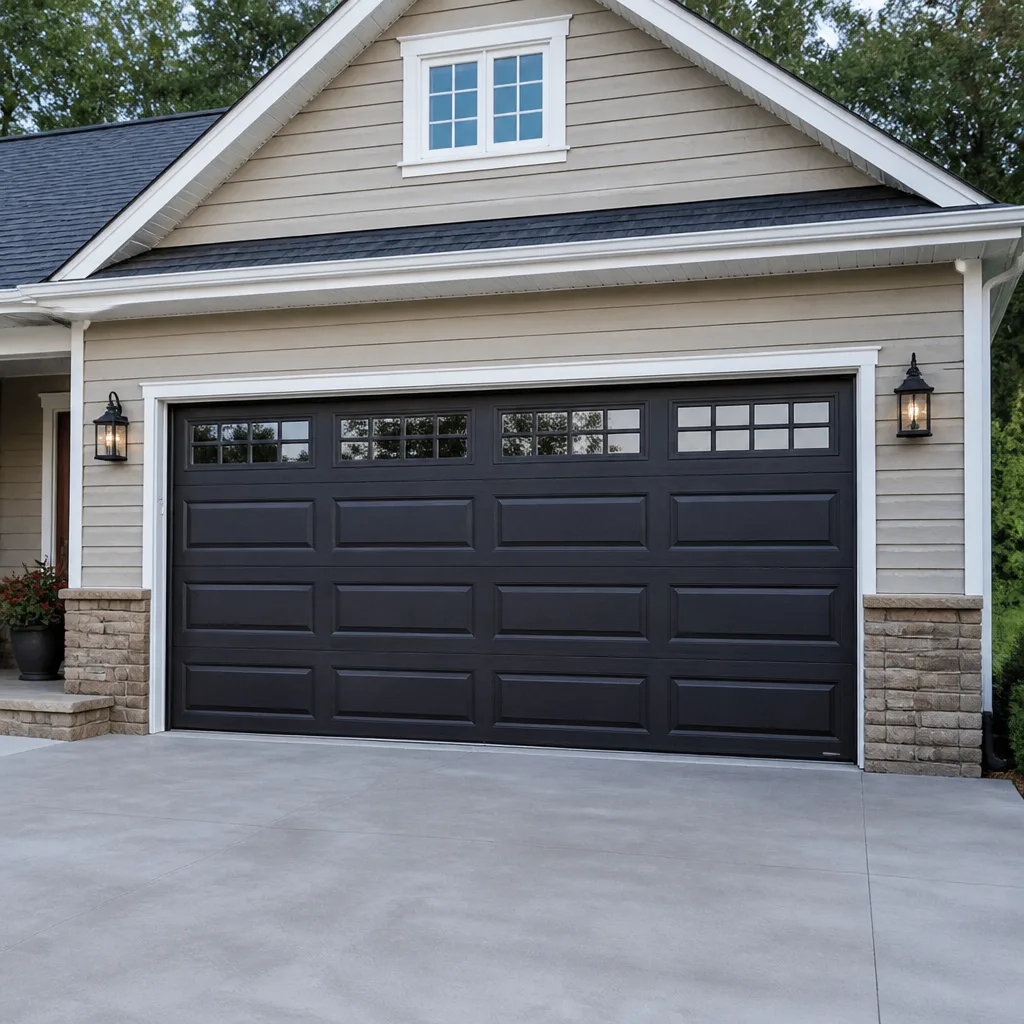 Raised-panel steel
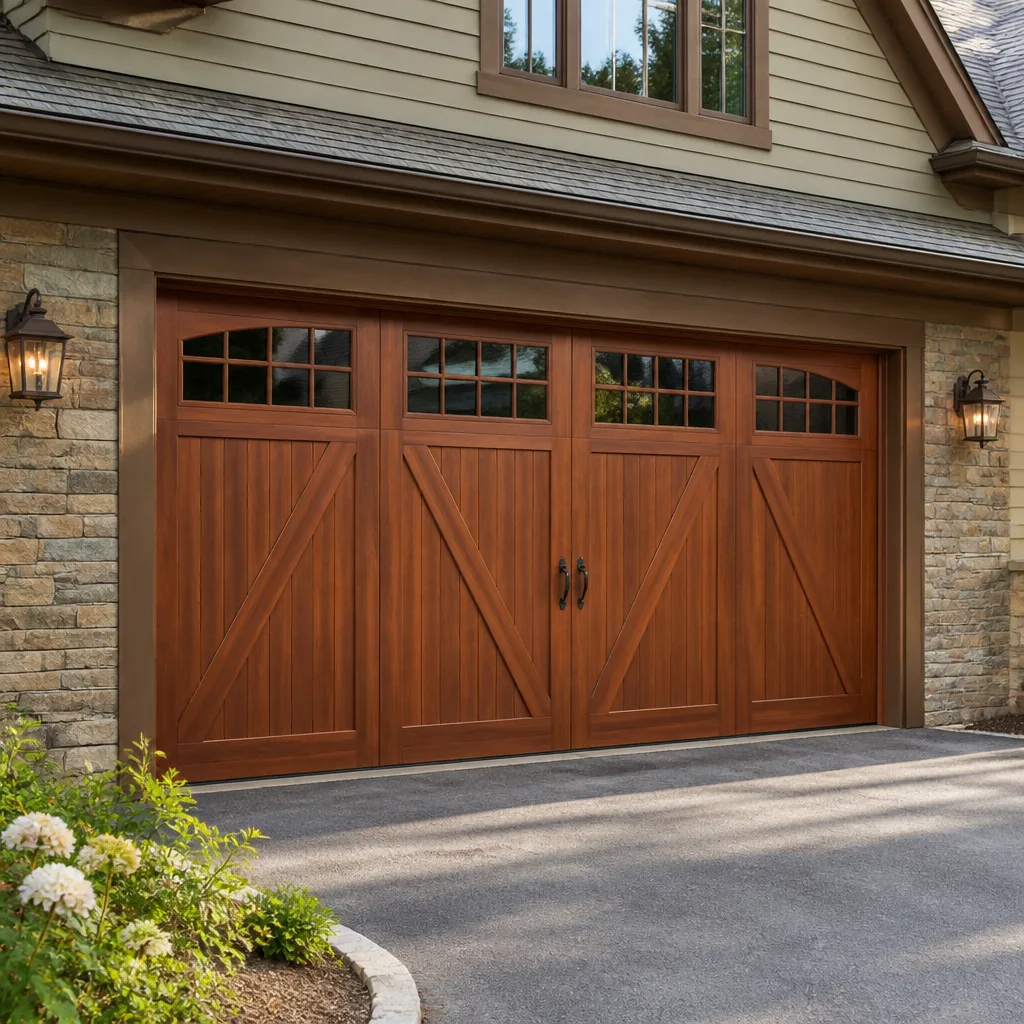 Carriage house
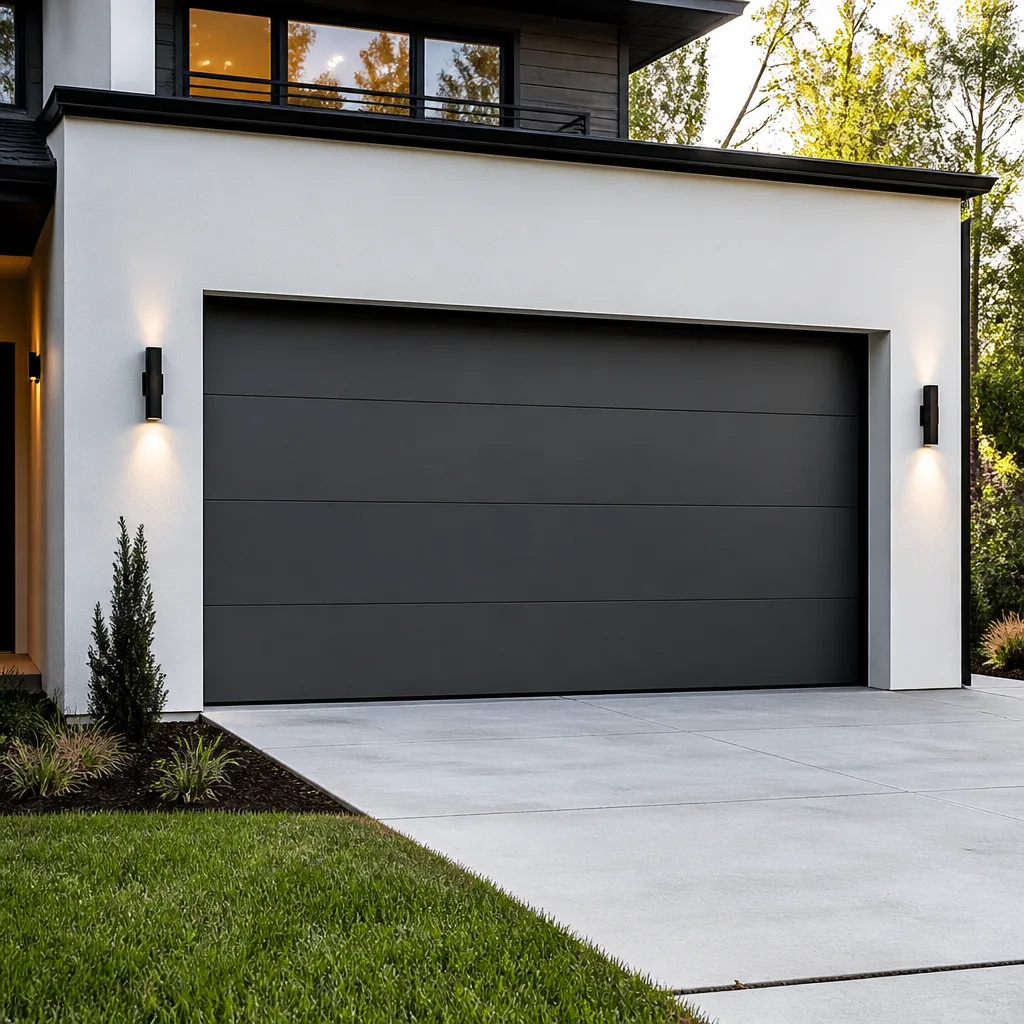 Modern flush
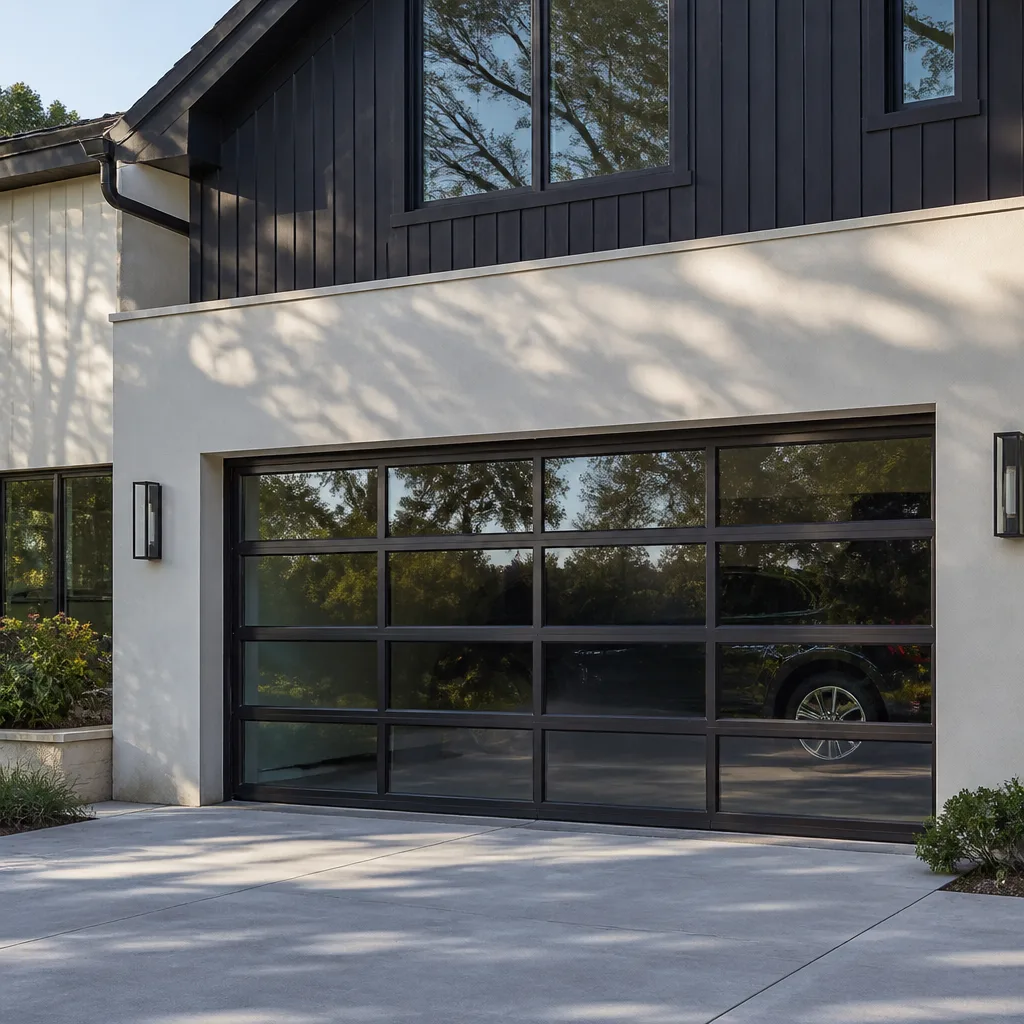 Full-view glass
 LiftMaster openers
 Chamberlain openers
Full 25-point door and opener safety check with every visit - springs, cables, rollers, tracks, and your LiftMaster or Chamberlain opener included
You get a price before we start. It does not change when the pro arrives.
Get your free estimateSeasonal Garage Door Care for Schaumburg: Year-Round Homeowner’s Guide
Most garage door advice you’ll read online was written for a mild climate that doesn’t exist in Schaumburg. It tells you to lubricate in spring and tidy up in fall, then calls it a year. That advice ignores the reason doors fail here: four genuinely different seasons, each stressing a different part of the same machine. A torsion spring that survived a mild winter can shear on the first hard January freeze, not because it’s worn out but because cold steel behaves differently than the steel you adjusted in October. This guide walks the calendar month by month, tied to real Schaumburg conditions, so you can catch the predictable failures before they strand your car in the driveway.
Quick Answer
Seasonal garage door care in Schaumburg means matching maintenance to the actual stress each season puts on the door: winter tension and frozen seals, spring post-winter inspection of cables and rollers, summer heat and panel movement, and fall opener calibration before the cold. The single most predictable failure, a snapped torsion spring in a January cold snap, is usually a $150 – $250 repair if you catch the warning signs and adjust ahead of the freeze. The written estimate you agree to before any work starts is the price you pay.
Styles & brands we work with
- Raised-panel steel
- Carriage house
- Modern flush
- Full-view glass
- LiftMaster openers
- Chamberlain openers
Table of Contents
- Why Schaumburg’s Four Seasons Beat Up Garage Doors
- November Prep: Tension Before the Hard Freezes
- January and February: Frozen Seals and Cold-Snap Failures
- March and April: The Post-Winter Inspection Sequence
- July and August: Direct Sun and Panel Warping
- October: The Last Window for Opener Settings
- The Full Year-at-a-Glance Maintenance Calendar
- What Seasonal Repairs Typically Cost in Schaumburg
Why Schaumburg’s Four Seasons Beat Up Garage Doors
A garage door is a mechanical system that expands, contracts, and flexes hundreds of times a year, and Schaumburg hands it the full range of that motion. Winter drives temperatures down hard enough to stiffen the grease inside the opener and shrink the steel in the torsion bar. Summer pushes a south-facing door into direct sun that heats the surface far hotter than the shaded air around it. In between, spring and fall swing the thermometer back and forth and work every fastener, cable, and roller in the assembly loose a little at a time.
That cycle is why a door in Schaumburg doesn’t fail the way a door in a mild climate fails. Here, the failures are seasonal and predictable:
- Winter snaps springs and freezes bottom seals to the slab.
- Spring reveals the cables, drums, and rollers that loosened over the cold months.
- Summer stresses panels, paint, and the thermal expansion of the frame.
- Fall exposes opener settings that were tuned for warm weather and now misread a stiffer door.
If you understand which part of the machine each season threatens, you can inspect the right thing at the right time instead of guessing. That’s the whole premise of this guide. Our technicians have up to 14 years of experience watching these patterns repeat across Schaumburg’s neighborhoods, from the older attached garages near the town center to the newer builds out toward Hoffman Estates and Rolling Meadows, and the seasonal rhythm is remarkably consistent.
One clarification before we go further: this is a maintenance guide, not a repair manual. The safe, homeowner-level work is inspection, lubrication, and calling in a trained technician at the right moment. The high-tension parts of a garage door, the torsion spring, the cables, and the drums, store enough energy to cause serious injury, and we’ll flag those clearly whenever they come up.
November Prep: Tension Before the Hard Freezes
The best time to prevent a January spring failure is November, before the first hard freeze sets in. Cold steel loses elasticity, and a torsion spring that was balanced for a 60-degree day is under-adjusted for the same door at 10 degrees. When the spring can’t flex the way it was set to, the stress concentrates and the metal fatigues faster. A door that felt perfectly balanced in October can feel noticeably heavier by January, and that heaviness is the spring telling you it wasn’t set up for the cold.
How to tell if your door was set up for winter
You don’t need to touch the spring to know. Here’s what to check, safely, with the door disconnected from the opener and moved by hand only if your door has a manual release and you’re comfortable doing it:
- Lift test: With the opener disengaged, lift the door halfway. A properly balanced door stays put. If it drops or feels heavy, the spring tension is low for the current temperature.
- Sound test: A loud bang on opening, followed by the door falling, is a snapped spring. Stop using the door and call for help.
- Gap test: A visible gap between the bottom seal and the floor means the door is sitting unevenly, which cold weather makes worse.
When a technician tunes spring tension for winter, they adjust the winding so the door balances correctly at the lower operating temperature. If your door was installed or last serviced in warm weather and never re-checked, ask for a balance check before the freeze. This is precisely the kind of spring work most homeowners should not attempt themselves; the winding bars and stored energy involved make it a trained-technician job. When a spring does fail, the fix is usually straightforward: a typical single torsion spring repair runs $150 – $250, and a matched pair is replaced together at roughly twice that. If you need it handled, our garage door spring repair team diagnoses the balance first and quotes before any work starts.
November is also the month to clear the tracks of summer grit, lubricate the rollers and hinges with a garage-door-specific lubricant (not WD-40), and confirm the bottom seal is pliable. A stiff, cracked seal is the one that freezes to the slab in January.
January and February: Frozen Seals and Cold-Snap Failures
January and February are when Schaumburg garage doors fail most often, and the two failures are a snapped spring and a bottom seal frozen to the floor. The spring failure is the predictable one we covered above. The frozen seal is the one homeowners try to fix themselves and sometimes make worse. When the rubber weatherstrip bonds to the concrete overnight, forcing the door up can tear the seal, bend the bottom section, or strain the opener.
How to safely unstick a frozen bottom seal
Do this gently, and never with heat near the weatherstrip:
- Disengage the opener so you’re not fighting the motor.
- Look along the bottom of the door for the ice bond and note where it’s stuck.
- Use a plastic scraper or the flat edge of a plastic putty knife to work under the seal and break the bond. Never use a metal tool that can gouge the rubber or the concrete.
- Once free, lift the door by hand slowly to confirm it moves cleanly, then re-engage the opener.
Here’s the hard safety rule: never use a heat gun, hair dryer on high, or open flame near the weatherstrip. The rubber softens and deforms long before it looks damaged, and a heat gun held too close will melt the seal into a permanent mess and can scorch the door’s finish. It’s also a fire risk in a space full of paper, cardboard, and fuel. If the seal is already torn or hardened, it needs replacing, not heating.
Cold-snap spring failures deserve a word on emergency response. When a door won’t move and it’s your only way in or out of the garage, waiting days for an appointment isn’t acceptable. Emergency garage door service exists for exactly this: a stuck or broken door that’s now a security and access problem, not a scheduling inconvenience. If a spring lets go on a Saturday, call us and we’ll book you for Sunday; we’re closed on Saturdays. When your door won’t move, we do.
March and April: The Post-Winter Inspection Sequence
By March, your door has survived months of thermal cycling, and the parts that loosened over the winter need a systematic look before they fail in a way that’s more expensive than the inspection. This is the single most valuable maintenance window of the year in Schaumburg, because it catches the slow damage the cold months caused while the weather is finally cooperative.
The post-winter inspection sequence
Work through this in order. Stop and call a professional if anything looks frayed, bent, or loose in a way you can’t safely correct:
- Cables: Inspect both cables for fraying, kinks, or slack. A frayed cable is a failure waiting to happen and is never a DIY fix; cables are under extreme tension. If you see damage, stop and call.
- Drums: Look at the cable drums at the top corners for wear, and confirm the cable is seated evenly in the groove. A cable that’s jumped the drum will bind the door.
- Rollers: Check each roller in the track for flat spots, cracks, or wobble. Steel rollers that sat in cold weather often develop flat spots; nylon rollers last longer in this climate. Replace worn rollers in sets.
- Hinges and fasteners: Tighten the hinge bolts and the track brackets that thermal cycling loosened. Don’t overtighten; the steel track can bend.
- Tracks: Confirm the vertical and horizontal tracks are plumb and straight, with no dents from a bumped door over the winter.
- Balance and travel: Re-check the balance with the opener disengaged, and watch the full open-and-close cycle for smooth travel.
If the inspection turns up a track knocked out of alignment or a roller that’s seized, that’s a routine garage door repair rather than an emergency, and it’s much cheaper to handle now than after the opener has been straining against the drag for a month. Spring is also a good time to wash the door and touch up paint chips before summer sun gets to them.
July and August: Direct Sun and Panel Warping
Summer in Schaumburg is hard on the door’s surface, and the problem is concentrated on south-facing doors that take direct sun for most of the day. The steel or aluminum skin heats well above the ambient air temperature, and that heat drives thermal expansion across the panels. On a door that’s been neglected, the result is visible: panels bow, seams open, and the paint finish on darker colors can blister or fade unevenly.
What heat does to the panels
The panel is a thin skin bonded to a frame, and heat makes that skin want to expand faster than the frame around it. Over a summer, a poorly insulated or improperly installed door can develop a warp along a panel edge, and once a panel warps it doesn’t flatten back on its own. The gap that opens at the seam lets water in during the next rain, which then freezes in winter, and now you’ve got a two-season problem from one hot July.
A few things reduce the heat stress in Schaumburg summers:
- Color matters: Lighter finishes absorb less heat than dark ones, so a white or tan door on a south-facing wall runs cooler than a black or dark bronze door.
- Insulation matters: An insulated door resists panel flex better than a thin, uninsulated one, and it holds up better through the hot-cold swing.
- Finish matters: Factory-baked finishes on quality steel and aluminum doors, including the Clopay and Amarr lines we service, are formulated to handle heat cycling better than a field-painted surface. A repaint with the wrong product can trap moisture and flake in the first hot summer.
If you’re replacing a south-facing door, ask about heat stability when you choose the finish. This is a measured, ordered job, not a same-day repair, so we schedule a free measure first and give you a written price before anything is ordered. Summer is also when the opener runs its longest cycles in the heat, so check that the motor housing isn’t too hot to touch after a full open-close. If it is, the opener may be straining, which brings us to the next repair path.
October: The Last Window for Opener Settings
October is your last real chance to calibrate the opener before the cold changes how the door feels. Here’s the mechanism: as temperatures drop, the grease in the opener and the steel in the door stiffen, and the door becomes physically harder to move. Your opener’s sensitivity and limit settings were probably tuned on a warm day. When the door starts feeling heavier in November, an opener set for summer can misread that extra resistance as an obstruction and reverse the door partway down, or refuse to close at all.
What to check on the opener in October
Every opener, whether it’s a LiftMaster, a Chamberlain, a Genie, or a Craftsman unit, has two settings worth confirming before the cold:
- Force or sensitivity setting: This tells the opener how much resistance to tolerate before it reverses. It should be set so the door closes firmly but reverses on real contact. Too sensitive and it false-reverses in the cold; too loose and it won’t reverse on a real obstruction.
- Travel limits: These set how far the door opens and closes. Cold-weather contraction can throw off the closed position so the door doesn’t quite seal, or the open position so it doesn’t clear the header.
Most openers have a learn or adjustment procedure in the manual, and many current models walk you through it. If yours is an older unit or you’re not sure, a short service call to re-set the limits and force for winter is money well spent. The obstruction-reversal safety feature is not something to disable to make a stubborn door close; if the door is reversing, the door is telling you something is binding, and the fix is to find the bind, not to override the safety. Our garage door opener repair service handles the full range of brands, so a Chamberlain that won’t close in the cold gets the same attention as a Genie or a LiftMaster. No brand restrictions, no runaround.
October is also the month to clear the tracks, lubricate the moving parts again before winter, and confirm the bottom seal is still soft and intact. Do those three things and you’ve done most of what prevents a January emergency.
The Full Year-at-a-Glance Maintenance Calendar
Here’s the whole year in one place, tied to Schaumburg’s seasons. Use it as a checklist and you’ll stay ahead of the failures that actually happen here.
- November: Balance-check the spring for winter tension, lubricate rollers and hinges, confirm the bottom seal is pliable, clear the tracks.
- December: Test the safety reverse (place a roll of paper towels under the closing door; it should reverse on contact). Watch for the first cold-weather stiffness.
- January – February: Unstick a frozen seal gently with a plastic tool, never heat. Watch for a loud bang or a door that won’t lift; that’s a spring, and it’s a call-us situation.
- March – April: Run the full post-winter inspection: cables, drums, rollers, hinges, tracks, balance.
- May – June: Wash and touch up the finish, check for panel warping starting on south-facing doors, test the opener’s force setting.
- July – August: Watch south-facing panels for heat warp, confirm the motor isn’t overheating on long cycles, keep the tracks clear of grit.
- September: Re-check the balance as temperatures start to swing, lubricate the moving parts.
- October: Re-set opener sensitivity and travel limits for the cold, do the final pre-winter lube and seal check.
Two seasonal rules of thumb: lubricate the moving metal parts twice a year, in fall and spring, and inspect the whole system once, in spring, after winter has done its damage. Everything else on the calendar is a targeted check at the moment that season threatens a specific part.
What Seasonal Repairs Typically Cost in Schaumburg
Seasonal care is mostly free if you do the inspection and lubrication yourself, and the repairs it prevents have fairly predictable price ranges in the Schaumburg market. These are typical estimates, and the written estimate you agree to before any work starts is the final price, so there are no surprises when the invoice arrives.
- Single torsion spring replacement: typically $150 – $250. A matched pair, which is usually replaced together, runs about twice that.
- Bottom seal replacement: a modest repair; ask for a quote, since the price depends on door width and seal type.
- Roller replacement (set): a routine repair folded into a spring or tune-up visit in most cases.
- Opener sensitivity and limit re-set: often part of a service call rather than a separate charge.
- Cable or drum repair: quoted after inspection, since the scope depends on what the winter wore out.
- Panel or full door replacement: measured and ordered, priced in writing after a free measure. This is not a same-day job, and anyone who promises one for a full door isn’t being straight with you.
The pattern to notice: the cheap fixes are the ones the calendar catches early, and the expensive ones are what happens when a small seasonal problem is left for two seasons. A $150 – $250 spring replaced in November is a fraction of what a warped, water-damaged door costs to replace the following summer.
Common Mistakes to Avoid
- Heating a frozen seal. A heat gun or hair dryer on high deforms the rubber and can scorch the finish. Use a plastic scraper and patience instead, or call for a seal replacement if it’s already torn.
- Forcing a door that won’t move. If the door bangs or won’t lift, the spring has likely failed. Forcing it strains the opener and can drop the door. Stop and call.
- Disabling the safety reverse to make a stubborn door close. If the door reverses in the cold, something is binding. Overriding the safety feature doesn’t fix the bind and removes your protection.
- Adjusting the torsion spring yourself. The winding bars and stored energy make this one of the most dangerous homeowner repairs there is. Leave spring tension to a trained technician.
- Greasing the tracks. Tracks should be clean and dry, not lubricated; grease in the track collects grit and makes the rollers drag. Lubricate the rollers, hinges, and springs, not the track surface.
- Skipping the spring balance check before winter. A door that balanced in October can be under-adjusted by the first freeze. Checking balance in November is cheap insurance against a January snap.
- Ignoring a south-facing panel that’s starting to bow. A warp doesn’t flatten on its own, and the seam gap it opens lets water in that freezes the following winter. Catch it in summer, not after the damage compounds.
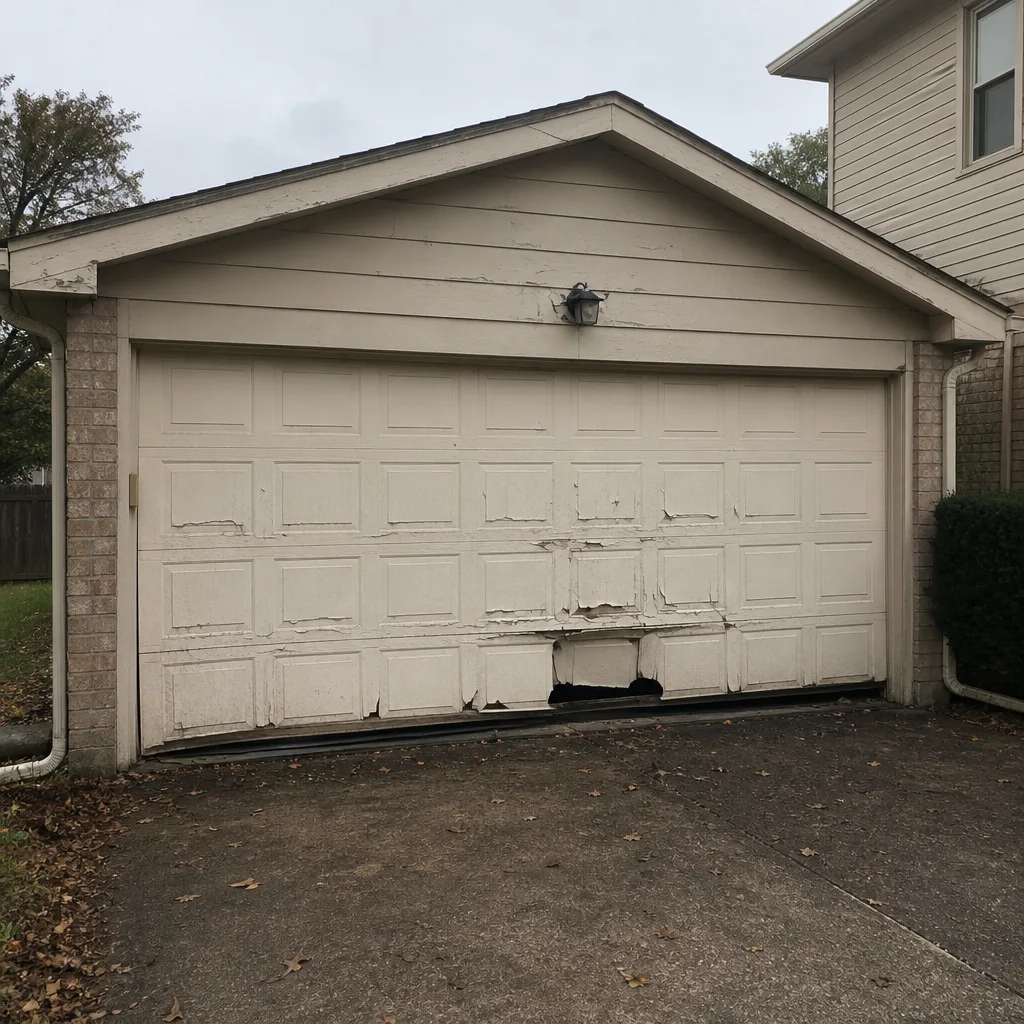
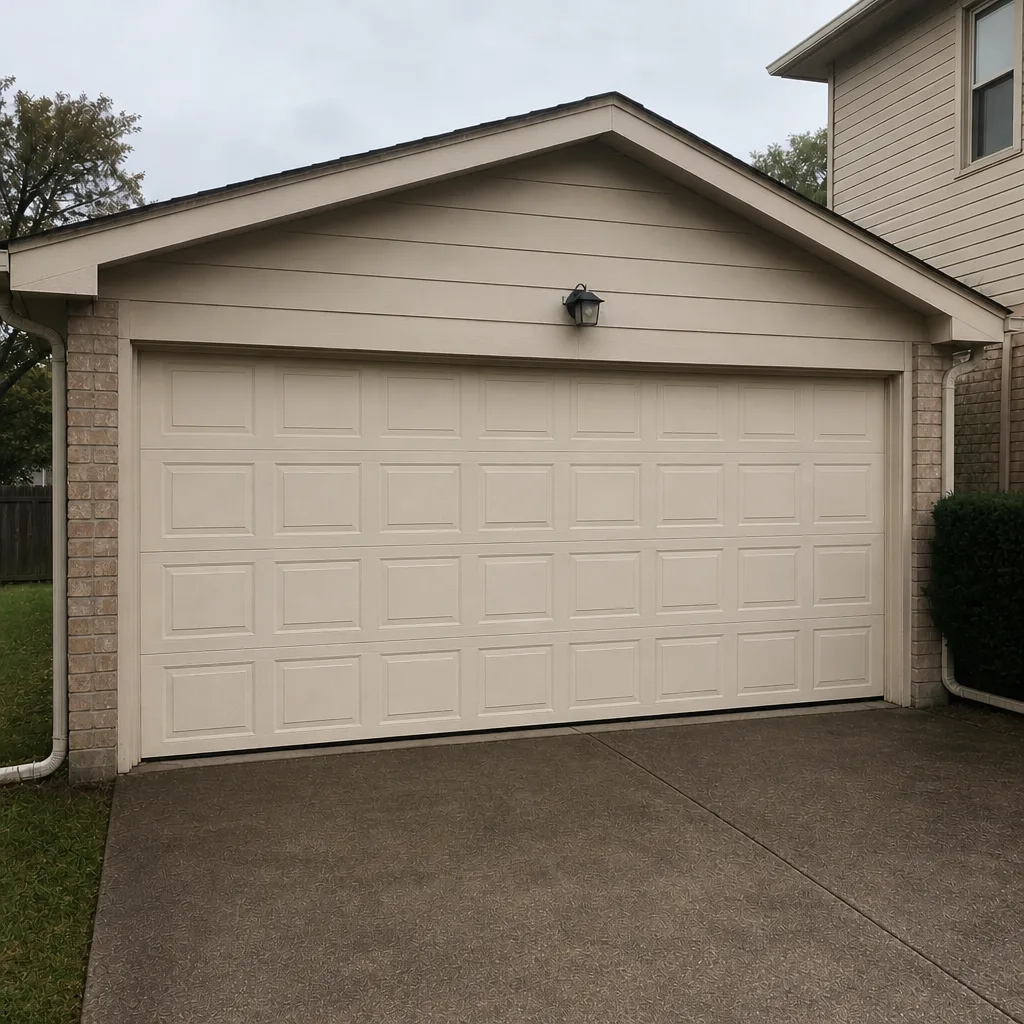
See the difference
 Before
 After
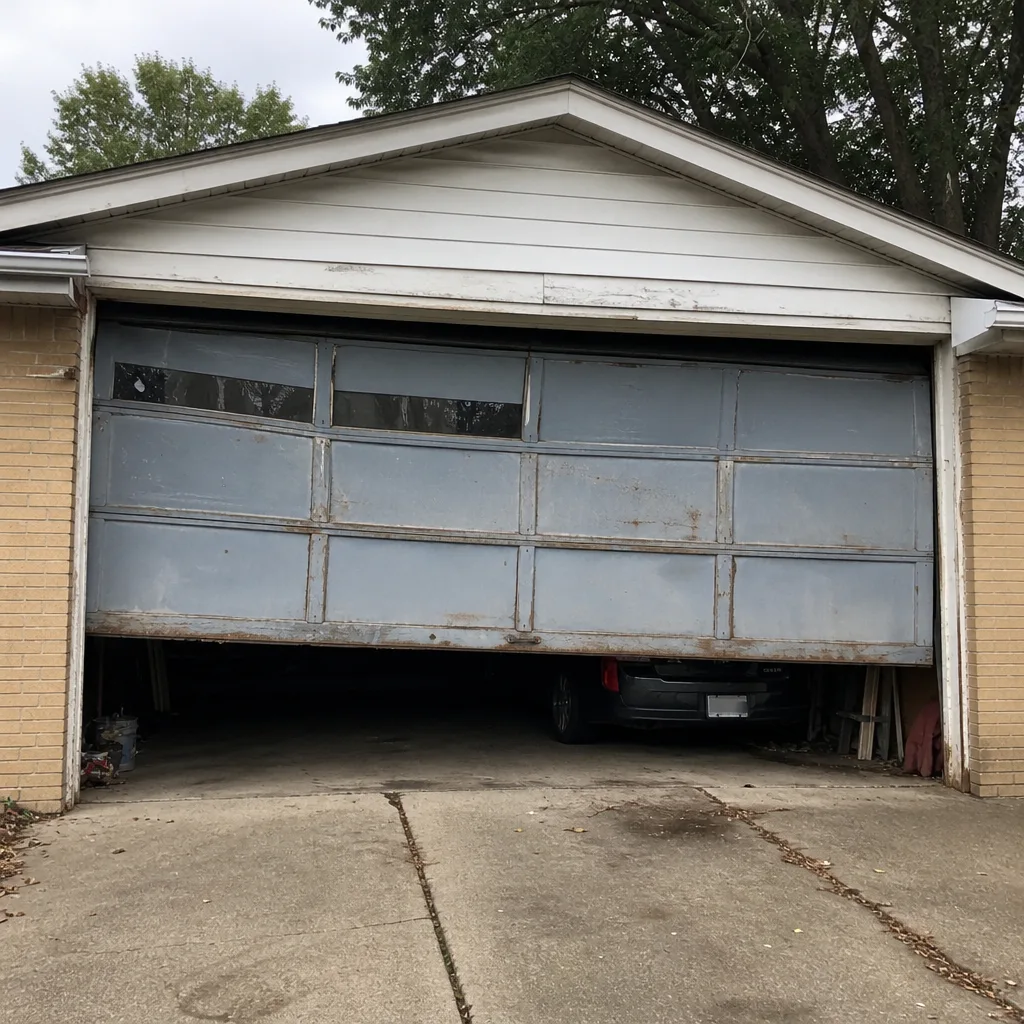 Before
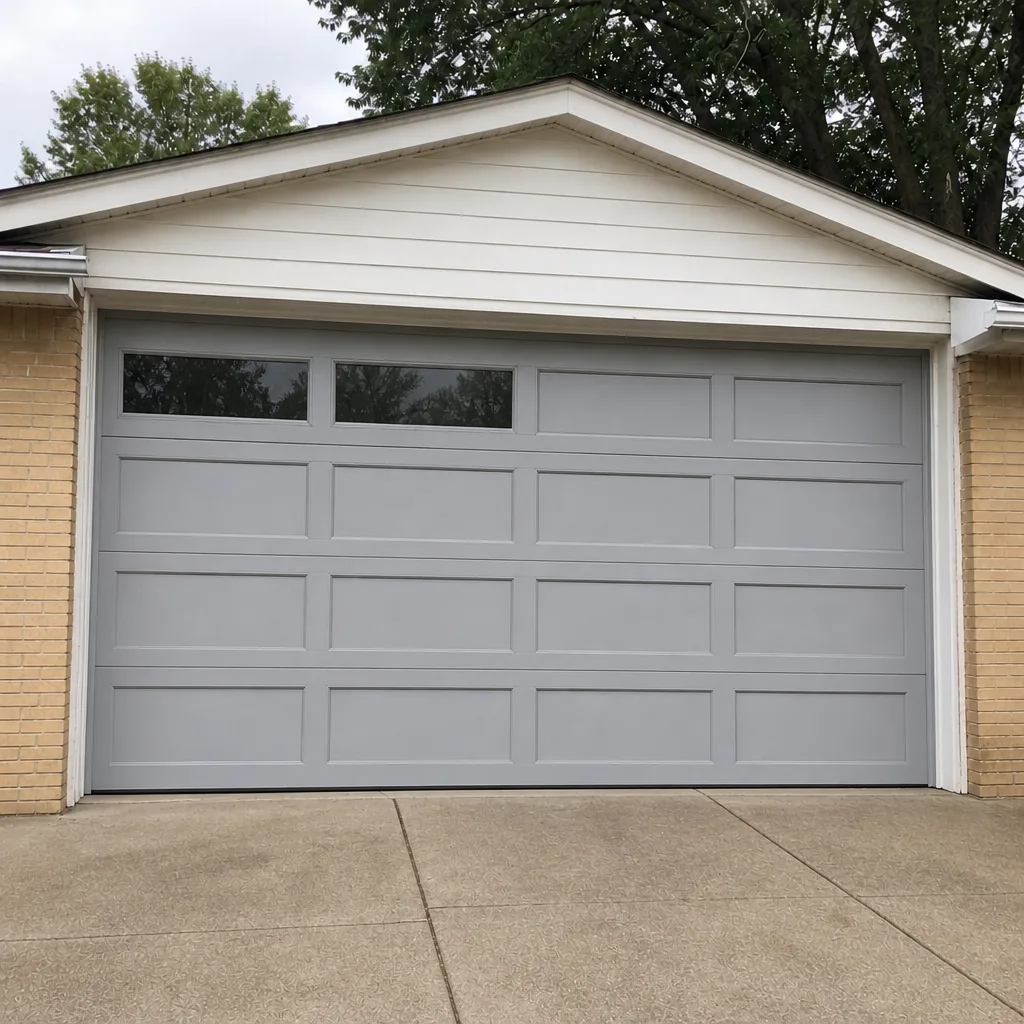 After
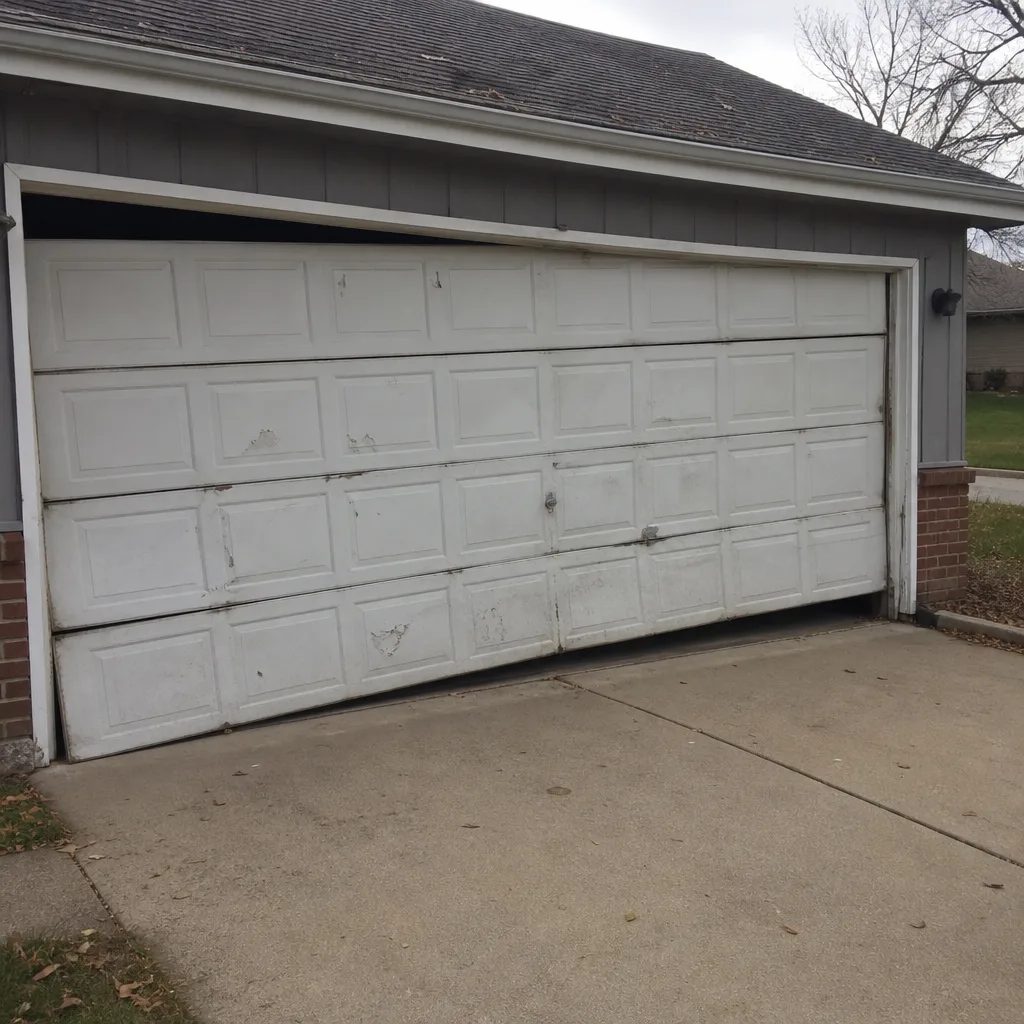 Before
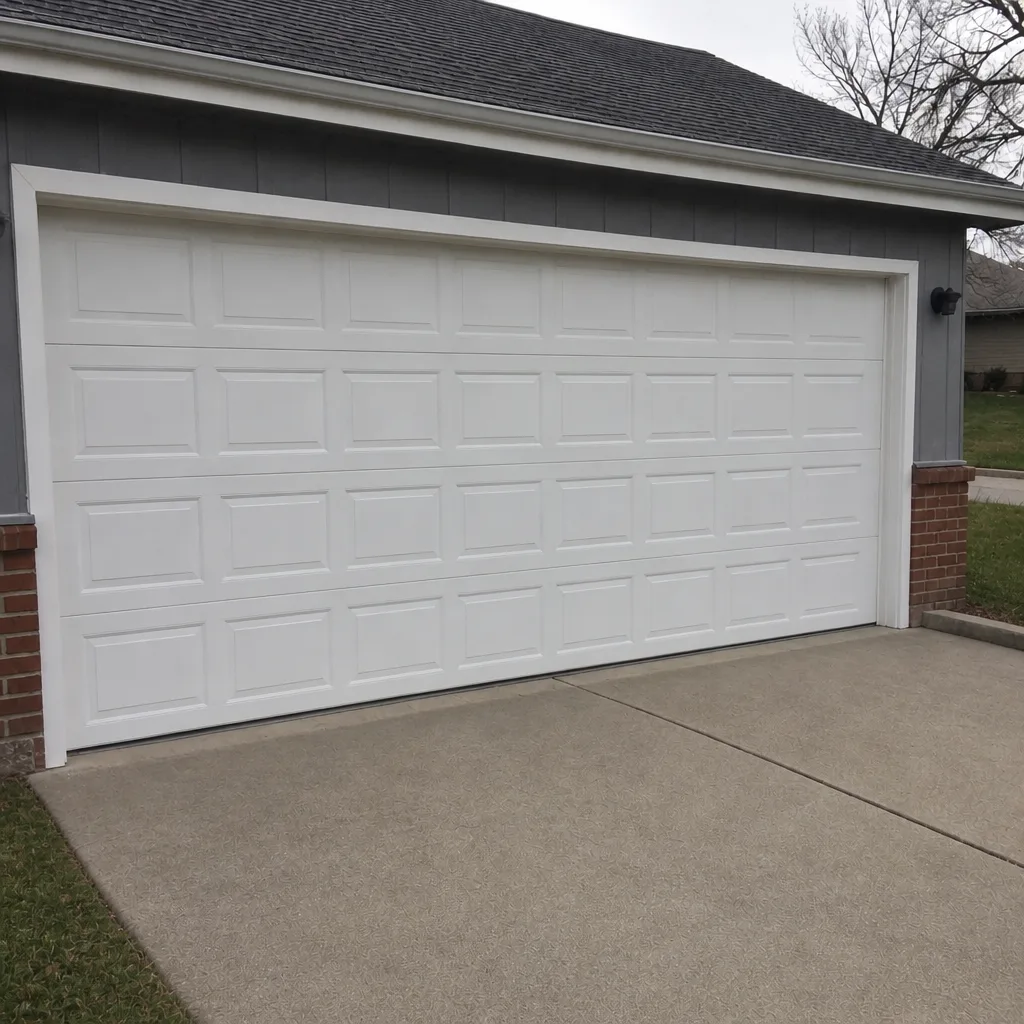 After
When to Call a Professional
Some seasonal care is yours to do: inspection, lubrication, cleaning the tracks, testing the safety reverse. But several situations are a clear call for a trained technician. Call us when a spring snaps, when a cable frays or comes off its drum, when a door won’t balance after a tension check, when an opener reverses or won’t close even after a limit re-set, or when a south-facing panel is warping and the door no longer seals. Any of these involves stored energy or a safety system you shouldn’t override. A garage door that’s stuck, broken, or off its track is also an access and security problem, which is exactly what emergency service is for. Schaumburg Garage Door Repair Co offers free estimates in Schaumburg on repair and replacement work, and we diagnose first and recommend second, so you’re never upsold a door you don’t need. We work on your brand, whatever it is, and we cover doors, openers, and springs under one call. Call (866) 947-9001 to book a free estimate or a seasonal check.
Frequently Asked Questions
Lubricate the moving parts twice a year, in fall and spring, and do one full inspection each spring after winter. Targeted checks fit each season: a balance check in November, a frozen-seal check in January, a heat-and-panel check in summer, and an opener re-set in October. That cadence matches how the four seasons stress the door here.
Cold steel loses elasticity, so a torsion spring set up for a mild day is under-adjusted once temperatures drop hard, and the concentrated stress makes the metal fatigue faster. It’s a predictable failure rather than a random one. A single spring repair is typically $150 – $250, and a matched pair runs about twice that. Call (866) 947-9001 for an exact quote; estimates are free.
No. A heat gun or a hair dryer on high will deform the weatherstrip and can scorch the door’s finish or start a fire. Use a plastic scraper to break the ice bond gently, and replace the seal if it’s already hardened or torn. If the door won’t free up, call us and we’ll take a look.
Most likely an obstruction-reversal sensitivity setting that was tuned for warm weather and now misreads the stiffer cold door as an obstacle, or travel limits that are off. The fix is to re-set the force and limits for winter, not to disable the safety reverse. If a re-set doesn’t solve it, something may be binding, so call (866) 947-9001 for a diagnosis.
No. We quote and agree the price before any work starts, so the written estimate is what you pay. Seasonal inspections sometimes turn up a second issue, but you’ll hear about it as a separate quote you can decline, not a surprise on the invoice. Call (866) 947-9001 for a free estimate.
We offer emergency garage door service for a stuck or broken door that’s a real access or security problem, and we’re closed on Saturdays. If a spring fails on a Saturday, call and we’ll book you for Sunday. The local pro we connect you with is licensed and insured as their state requires. Call (866) 947-9001.
The Bottom Line
Schaumburg’s four seasons each attack a different part of the garage door, so a single “spring and fall” routine doesn’t cover it. The year-round calendar that actually prevents failures here is specific: balance and tension in November, a gentle frozen-seal routine in deep winter, a full post-winter inspection of cables, drums, and rollers in March, heat and panel watch on south-facing doors in summer, and an opener sensitivity and limit re-set in October before the cold makes the door feel heavy. Do those checks and you’ll catch the predictable problems while they’re still cheap. For anything involving springs, cables, or a door that won’t move, call (866) 947-9001. Our technicians have up to 14 years of experience, we work on your brand, and the written estimate is the price you pay. Free estimates on repair and replacement, and emergency service when a door needs it. Visit Schaumburg Garage Door Repair Co to see the full range of what we handle.
Written by the team at Schaumburg Garage Door Repair Co.